
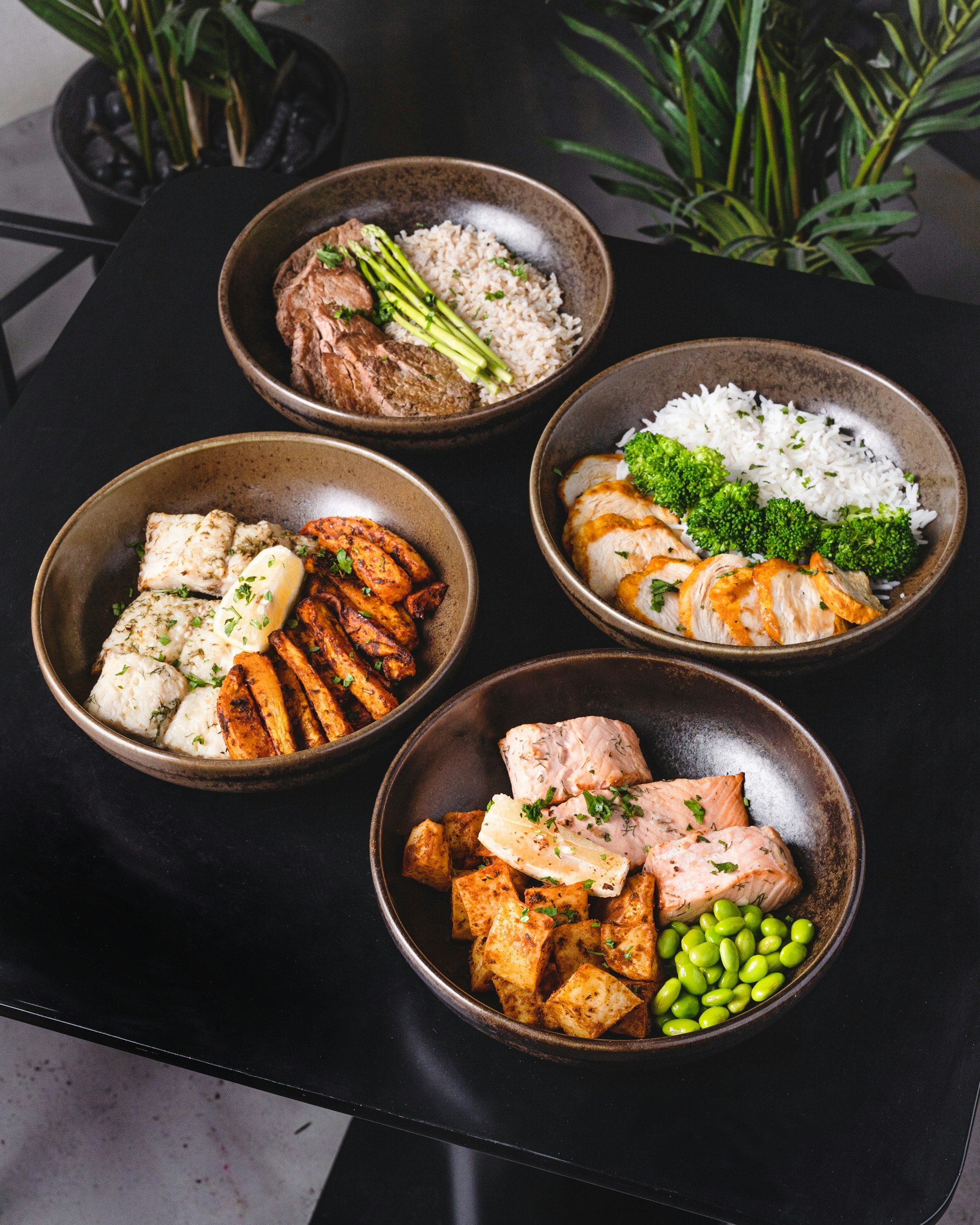

If you eat a light salad at noon and you’re circling the vending machine by 3 pm, the fix usually isn’t more willpower. It’s a lunch with real protein in it. Below are five high-protein lunches you can cook in one Sunday session. Each one lands between 365 and 511 calories and between 36 and 48 grams of protein, and I worked every number out from USDA’s own food data, gram by gram.
I’m not a trainer, a doctor or a dietitian. I’m the guy who reads the label and the published guidance, does the arithmetic out loud, and tells you the boring answer. So here it is up front: these lunches only help you lose fat inside a calorie deficit. They make the deficit easier to live with. They don’t replace it.
One thing first. If you have kidney disease, diabetes, or any condition where you’ve been told to watch your protein or your carbs, or you’re pregnant, talk to your doctor before you change how you eat. That goes double for a plan that’s built around protein.
Why You’re Starving by 3 PM

A lot of “diet” lunches are low in calories and low in protein at the same time. A plate of lettuce with a light dressing fits a calorie deficit on paper, and then your stomach starts complaining in the middle of the afternoon.
There’s a small study that gets right at this. Researchers at the University of Missouri gave 20 healthy women a 160-calorie snack 3 hours after lunch, done three different ways on different days: a high-protein yogurt with 14 grams of protein, high-fat crackers, or high-fat chocolate with 2 grams. After the yogurt, afternoon hunger dropped more than after the chocolate. The women asked for dinner about 30 minutes later, and they ate about 100 fewer calories once dinner came. Against the crackers the gaps were smaller and didn’t reach significance. Weirdly, nobody reported feeling any fuller.
Honestly, it’s a snack study and not a lunch study, and 20 women is a small group, so I’m not hanging the whole plan on it. But it lines up with what most people notice on their own: protein holds you longer than the same calories of crackers or chocolate. So this plan puts the protein at lunch, and keeps a cup of plain Greek yogurt in the fridge as your 3 pm backup. A 170-gram cup of plain nonfat Greek yogurt is about 100 calories and 17 grams of protein.
If you want the longer version of the protein question, I went through it in Is High Protein Good for Weight Loss?
One Sunday, Five Lunches

Here’s the order I’d cook it in, so nothing sits around waiting on anything else.
- The sweet potatoes go in the oven first, because they take the longest.
- Get the lentils going on the stove, plus a pot of quinoa and one of brown rice.
- Cook the chicken breast in one pan and the ground turkey in another. Both are done at 165°F on a food thermometer, the turkey included, because ground turkey counts as poultry.
- Boil the eggs, steam the broccoli, then press the tofu and cut it into cubes.
- Cool everything in shallow containers and get it into the fridge within 2 hours of cooking.
Two of the five boxes go straight into the freezer, not the fridge. I’ll explain why in the safety section further down. Short version: a lunch cooked on Sunday is too old by Friday.
The thing is, the cooking isn’t the hard part. The hard part is weighing everything once, writing it down, and then not guessing for the rest of the week.
Monday: Lentil and Egg Salad

Monday gets the salad, because it’s the freshest it’ll ever be.
- 150 g cooked lentils
- 2 large hard-boiled eggs (100 g)
- 40 g baby spinach
- 80 g tomato
- 20 g red onion
- 1 teaspoon olive oil (5 g)
- 75 g plain nonfat Greek yogurt with a squeeze of lemon, as the dressing
That comes to 449 calories and 36 grams of protein. It’s the lowest protein of the five, but the lentils bring about 14 grams of protein and about 12 grams of fiber on their own, and the two eggs add about 13 grams more. Fiber plus protein is a pretty good combination for a long afternoon.
I didn’t count the lemon. It barely moves anything.
Tuesday: Chicken and Quinoa Bowl

The bowl in the photo uses red rice and corn. Mine swaps in quinoa, but it’s the same idea: a grain, a lean meat, a pile of vegetables.
- 120 g grilled chicken breast
- 100 g cooked quinoa
- 60 g cucumber
- 80 g tomato
- 60 g red bell pepper
- 1 teaspoon olive oil (5 g)
- 50 g plain nonfat Greek yogurt with lemon, as the dressing
That’s 414 calories and 48 grams of protein, the most protein of the week. The chicken does most of the work, since 120 grams of grilled breast is about 37 grams of protein before anything else goes in the box. It’s a lunch you can eat on a Tuesday without thinking about it, which is kind of the whole point.
Wednesday: Salmon, Sweet Potato and Broccoli

- 120 g canned pink salmon, drained
- 150 g baked sweet potato
- 100 g steamed broccoli
- 50 g plain nonfat Greek yogurt with dill, as the sauce
That’s 365 calories and 38 grams of protein, the lightest box of the five. The photo shows a fillet. Canned salmon is what I’d actually put in a Wednesday box, and it’s what the numbers are based on: it’s already cooked, it’s cheap, and about 28 grams of the protein comes from it. If you’d rather bake a fillet, salmon is done at 145°F, and the numbers will shift a bit.
You can eat this one cold, which is handy if your office microwave has a line.
Thursday: Tofu and Edamame Rice Bowl

- 150 g firm tofu (the calcium-set kind)
- 75 g shelled edamame
- 100 g cooked brown rice
- 50 g shredded cabbage
- 40 g grated carrot
- 1 teaspoon sesame oil (5 g)
- 15 g low-sodium soy sauce (about a tablespoon)
That’s 511 calories and 40 grams of protein. The tofu alone is about 26 grams. It’s the biggest box of the week, so if you need it smaller, use half the rice and you save about 60 calories.
This one goes in the freezer on Sunday without the cabbage and carrot. Shred those on Thursday morning (it takes two minutes) so they stay crunchy.
Friday: Turkey and Black Bean Taco Bowl

- 100 g cooked 93% lean ground turkey
- 80 g black beans
- 80 g tomato
- 20 g onion
- 30 g baby spinach
- 50 g salsa
- 50 g plain nonfat Greek yogurt, in place of sour cream
That’s 392 calories and 42 grams of protein, with 27 of those grams from the turkey. Freeze the turkey and the beans together on Sunday. The tomato and salsa, plus the spinach and the yogurt, go on fresh on Friday morning, so it tastes like you made it that day.
The Whole Week on One Page

Weigh it once on Sunday and you never have to guess on a Tuesday. Here’s the week laid out:
Add it up and the five lunches come to 2,131 calories and 204 grams of protein, which is about 426 calories and 41 grams of protein per lunch.
If you watch your salt, three things carry most of it. The canned salmon is about 457 mg of sodium in 120 grams. The salsa is about 356 mg in 50 grams. The soy sauce, even the low-sodium kind, is about 540 mg in that one tablespoon.
The general how-to of portioning and labeling the boxes is in Meal Prep for Weight Loss: Count It Once, Keep It Safe, so I won’t repeat it here.
Keep It Safe: The Fridge for Three Days, Then the Freezer

This is the part most meal prep posts skip. The USDA’s food safety service says cooked leftovers keep 3 to 4 days in the fridge, or 3 to 4 months in the freezer. Cook on Sunday and Wednesday is day 3, still inside that window. Thursday and Friday are not.
So the first three boxes come out of the fridge. Thursday’s and Friday’s boxes come out of the freezer, and you move each one to the fridge the night before so it thaws slowly. The same agency says to get cooked food into the fridge within 2 hours (1 hour if it’s over 90°F), to keep the fridge at 40°F or below, and to reheat leftovers until they reach 165°F on a food thermometer.
Is that a bit fussy? Sure. Food poisoning is way more fussy.
Where Lunch Fits in a Calorie Deficit
Turns out the lunch is the easy part. The day has to add up too.
Harvard Health puts it this way: to lose 1 to 2 pounds a week, eat 500 to 1,000 calories a day less than you need to maintain your weight. The CDC says people who lose at that gradual, steady pace of about 1 to 2 pounds a week are more likely to keep the weight off. And Harvard Health draws a floor under all of it: calorie intake shouldn’t fall below 1,200 a day for women or 1,500 a day for men, except under the supervision of a health professional.
At about 426 calories, one of these lunches leaves plenty of room for breakfast and dinner, even near those floors. Your own numbers depend on your size and how much you move, so run them through the calorie deficit calculator and the protein calculator on this site instead of copying mine.
And when the scale stalls and you hit the plateau, lunch is the easiest meal to check, because you already know its numbers to the gram.
The Boring Answer

None of these lunches is magic. They’re plain protein with beans or grains and a pile of vegetables, weighed once and put in boxes. What they do is take one meal a day off the table as a decision, and push the 3 pm hunger back far enough that the vending machine loses.
Cook on Sunday, freeze two, and add a brisk walk after lunch if you can fit one in. If the scale doesn’t move after a few weeks, check the rest of the day before you blame the lunches. And if anything about your health makes you unsure, your doctor is the right first call. Got a lunch you’d add to the rotation? Tell me in the comments.