
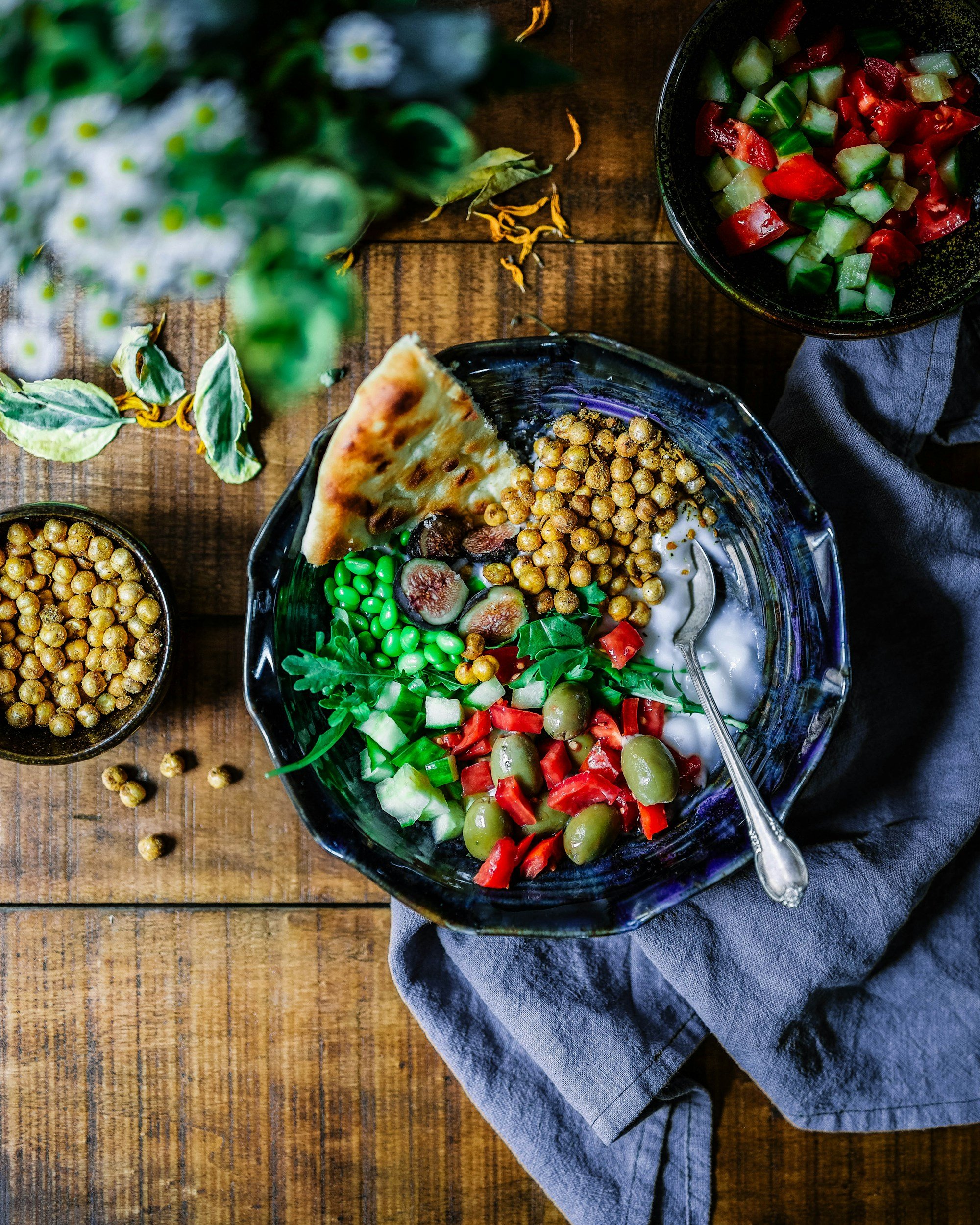

Here’s the boring answer first. An anti-inflammatory diet is mostly a Mediterranean diet with a newer name. That means a lot of the good stuff (vegetables, fruit, beans, whole grains, fish, nuts, olive oil) and a lot less fried and sugary stuff, plus less processed food. It’s a good way to eat. But it doesn’t burn fat by itself. The weight comes off from a calorie deficit, and some of the most “anti-inflammatory” foods on the list are also some of the most calorie-dense things in your kitchen. Below is a simple week of meals that keeps both in view.
Ernest here. I’m not a dietitian or a doctor, and this isn’t medical advice. If you have an inflammatory condition (arthritis, a bowel disease, anything you’re being treated for), a food list from a fitness blog doesn’t replace your doctor. The same goes if you take medication, you’re pregnant, or you’ve ever had an eating disorder. Talk to your doctor before you change how you eat.
I went through Harvard Health’s guide on foods and inflammation, its calorie advice, and the USDA’s numbers for every food in this week. Then I did the arithmetic out loud, which is kind of my thing.
What “Anti-Inflammatory” Means on a Plate

Inflammation is your immune system doing its job. A cut swells, a cold makes your throat sore, and then it settles down. The problem Harvard Health describes is the kind that never settles: inflammation that hangs around day in and day out, even with nothing to fight, which researchers have linked to heart disease and diabetes, plus arthritis and depression.
Food is one of the things that seems to nudge it. Harvard’s list of foods to favor reads like a Greek grandmother’s shopping list. Tomatoes. Olive oil. Green leafy vegetables like spinach or kale, and collards too. Nuts like almonds and walnuts. Fatty fish like salmon and mackerel, or tuna and sardines. Fruits like strawberries and blueberries, cherries, oranges.
And if you want one eating plan that already follows those rules, Harvard points you to the Mediterranean diet, which is heavy on fruits and vegetables, nuts, whole grains, fish, healthy oils. That’s the whole secret. You don’t need a special cookbook with “inflammation” on the cover.
The Foods It Favors, and the Ones It Cuts Back

On the other side, Harvard’s list of foods to limit as much as you can:
- refined carbs like white bread and pastries
- French fries and other fried foods
- soda and other sugar-sweetened drinks
- red meat like burgers and steaks, and processed meat like hot dogs and sausage
- margarine and shortening, plus lard
Notice anything? That’s pretty much the list every weight-loss plan already tells you to cut. Fries and pastries pack a lot of calories into food that doesn’t keep you full for long. Soda is calories you drink. So you get a bonus here. The swaps that fit the anti-inflammatory list also tend to make a calorie deficit easier to keep.
One more interesting bit. Harvard notes that unhealthy foods add to weight gain, which is itself a risk factor for inflammation, but that in several studies the link between foods and inflammation held up even after researchers took weight into account. So the food choices seem to matter on their own, and losing weight helps on top of that.
The Healthy Fats That Quietly Eat Your Deficit

Here’s the trap I see people fall into, and I fell into it myself. The anti-inflammatory list is full of “eat freely” vibes. Olive oil! Nuts! Avocado! So you pour, you sprinkle, you snack, and then you stare at the scale on a Tuesday and wonder what happened.
Here’s what the USDA says those foods cost you:
A tablespoon of olive oil is 119 calories. An ounce of walnuts (about 14 halves) is 185. An ounce of almonds (about 23 nuts) is 164. Half an avocado is about 161.
Now do the math on a pretty normal “healthy” day. Three tablespoons of olive oil across your cooking and salad is 357 calories. Add an ounce of walnuts on your oats and half an avocado at lunch, and you’re at 703 calories from fats alone. That’s more than the 500-calorie daily cut that adds up to about a pound a week.
I’m not telling you to fear olive oil. It’s on the list for good reason, and fat helps you feel full. Just measure it. A tablespoon is a tablespoon, not a “glug.” Count the nuts into a small bowl instead of eating them from the bag.
READ: Best 7 Nuts for Weight Loss
Where the Weight Loss Actually Comes From
The fat comes off because you eat a bit less than you burn, day after day. Harvard Health gives a simple way to ballpark it.
Multiply your weight in pounds by 15. That’s roughly what you need to maintain your weight if you’re moderately active, meaning at least 30 minutes of activity a day. To lose 1 to 2 pounds a week, a pace experts consider safe, eat 500 to 1,000 calories a day less than that.
Harvard’s own example: a woman who weighs 155 pounds lands at about 2,325 calories to maintain (155 times 15). Her weight-loss range would be 1,325 to 1,825 calories a day.
And here’s the floor. Harvard says calories shouldn’t fall below 1,200 a day for women or 1,500 a day for men, except under a health professional’s supervision, because eating too little can leave you short on nutrients. I’d add my own rule. If a plan promises more than 2 pounds a week, it’s not a plan you’ll still be on in two months.
A Simple Week of Meals

This isn’t a meal plan with exact calories, because your number isn’t my number. It’s a week of meals built from Harvard’s list, with the calorie-dense parts measured. Size the portions to your own target, and keep the oil and nuts honest.
- Monday: oats with blueberries and a measured spoon of walnuts; a big spinach salad with chickpeas and tomatoes, dressed with one tablespoon of olive oil; baked salmon with roasted broccoli and brown rice.
- Tuesday: Greek yogurt with strawberries; leftover salmon over greens; lentil soup with a slice of whole-grain bread.
- Wednesday: oats again (I’m not fancy) with an orange on the side; lentil soup leftovers; chicken thighs roasted with tomatoes and peppers.
- Thursday: scrambled eggs with spinach and tomatoes; chicken and veggies from last night; sardines on whole-grain toast with a big side salad.
- Friday: yogurt with cherries; a bean and veggie wrap; homemade turkey chili, heavy on the beans.
- Saturday: veggie omelet; chili leftovers; grilled mackerel or salmon with a pile of roasted vegetables.
- Sunday: oats with blueberries; a big “clean out the fridge” salad; roast chicken with potatoes and green beans, then prep for the week after.
Snacks, if you need them: an apple, an orange, a measured ounce of almonds, or a cup of blueberries (about 84 calories). Drinks: water, coffee or tea. Soda’s off the list for both reasons.
You’ll see some things repeat. That’s on purpose. Cooking a big pot on Sunday and eating it twice is how this survives a busy week.
READ: Meal Prep for Weight Loss: Count It Once, Keep It Safe
Sunday Prep in About an Hour

Most of the week above comes from four things you can make at once. Here’s my Sunday routine, more or less.
Start a pot of lentils. A cup of cooked lentils is about 230 calories with roughly 18 grams of protein and 16 grams of fiber, which is why they show up twice this week. While they simmer, roast two sheet pans of vegetables. Then bake the salmon and some chicken thighs together on a third pan. Last, wash the greens and portion out the nuts into small containers, an ounce each.

That’s it. The lentils become soup, the vegetables go into wraps and salads, and the salmon and chicken cover Monday’s and Wednesday’s dinners plus the lunches after them. If you have a kitchen scale, use it for the oil and the nuts. If you don’t, a measuring spoon and a little discipline will do.
What It Won’t Do

No food list cures a disease, and no anti-inflammatory diet is a detox. If you see “drop 10 pounds of inflammation in a week” on a box or a reel, that’s water and marketing. Real fat loss is slower than that, and it’s supposed to be.
It also won’t fix inflammation that comes from an actual medical condition. Swollen joints, a gut that won’t settle, pain that keeps coming back: those belong with your doctor, who can test for what’s going on.
What it will do is give you a pleasant, filling way to eat that lines up with almost every bit of mainstream advice out there. Pair it with a brisk walk most days and a deficit you can keep, and you’ve got the boring plan. The boring plan works.
The Boring Answer on Anti-Inflammatory Eating

Eat more of Harvard’s list (vegetables, fruit, beans, whole grains, fish, nuts, olive oil). Eat less fried food and soda, fewer pastries, less processed meat. That part is about health. The weight part is still a calorie deficit, about 500 to 1,000 calories a day for 1 to 2 pounds a week, never below 1,200 calories a day for women or 1,500 for men. Measure the olive oil and the nuts, because that’s where an “anti-inflammatory” week quietly turns into a maintenance week. And if you’re dealing with real inflammation from a health condition, start with your doctor, not your grocery cart.