
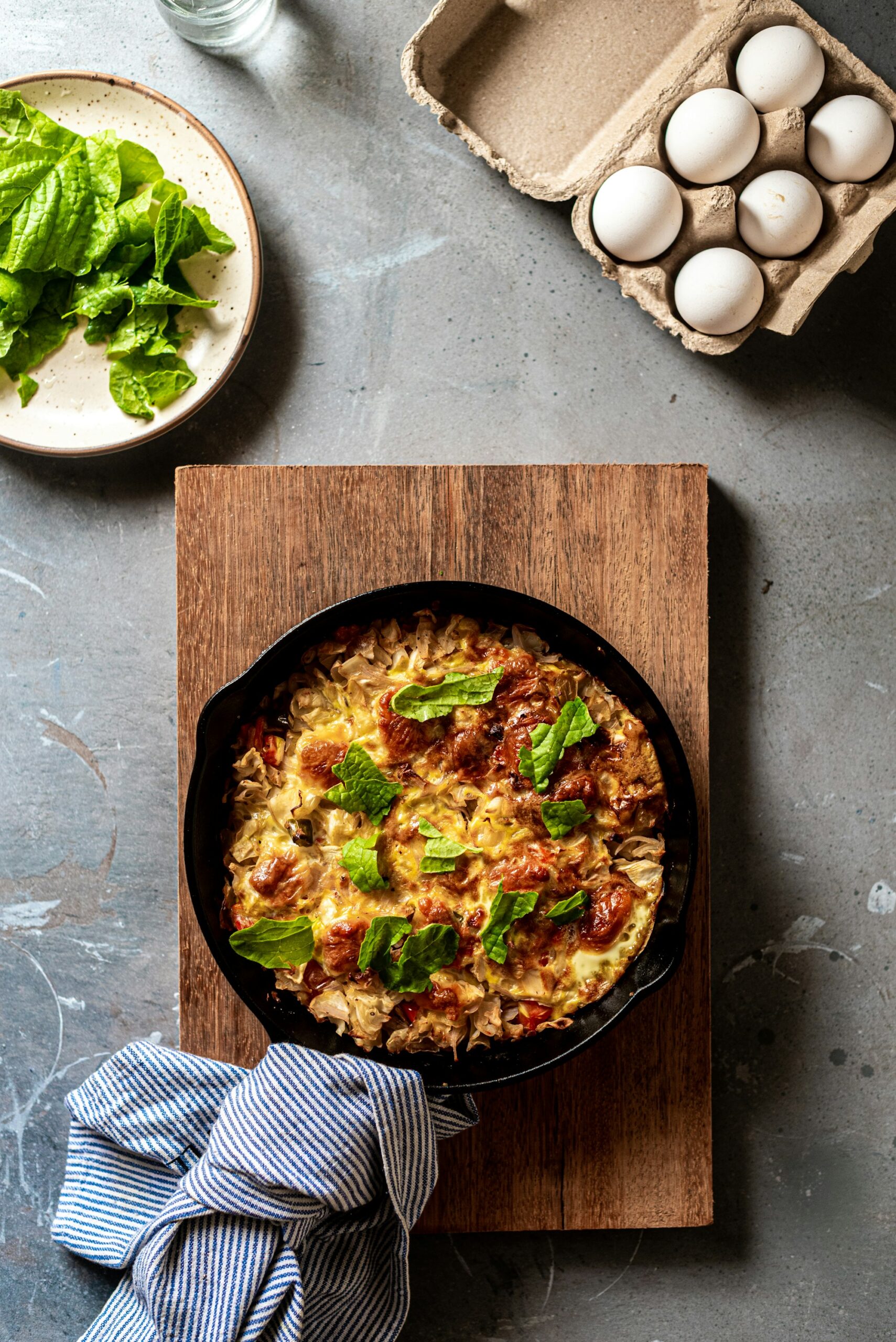

Here’s the boring answer to breakfast when you’re trying to lose fat: decide it once, on a Sunday, and then stop deciding it. One pan of eggs and vegetables over a layer of potatoes, baked and cut into 10 squares, gives you five breakfasts at about 375 calories and 32 grams of protein each. I worked the numbers out from the USDA’s food database, ingredient by ingredient, so you don’t have to guess.
Quick reminder of who’s talking. I’m not a trainer, a dietitian or a doctor. I’m the guy who reads the label and does the arithmetic out loud. If you have a medical condition, take medication, or have been given a calorie target, your doctor’s numbers beat mine every time.
Why I Bake Breakfast on a Sunday
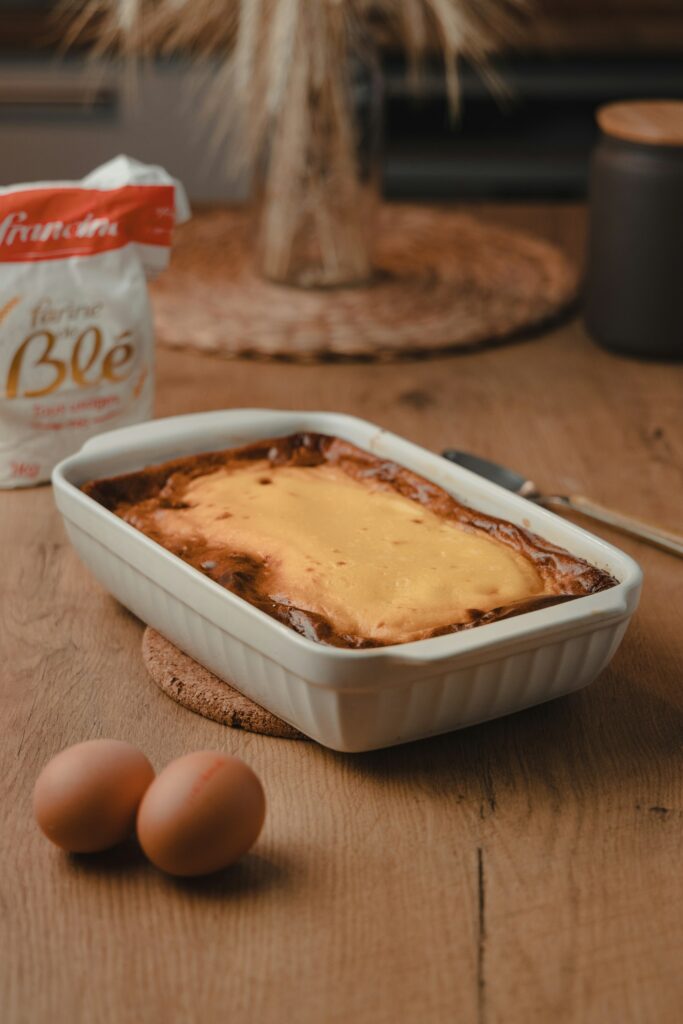
Weekday mornings are where my plans used to fall apart. Not dinner. Breakfast. At 6:40 on a Tuesday, with the coffee not done yet, whatever is fastest wins, and the fastest thing in most kitchens is a granola bar or a drive-through.
A casserole fixes that because the hard part already happened. On Sunday I spend about an hour, most of it waiting on the oven. Monday through Friday, breakfast is a square or two on a plate and two minutes in the microwave. I know the calories before I’ve even sat down, which matters a lot when you’re running a calorie deficit and every guess tends to be a low guess.
I’ve written about the bigger version of this idea in Meal Prep for Weight Loss: Count It Once, Keep It Safe. This is the one dish from that habit I’d keep if I could only keep one.
What Goes in the Pan
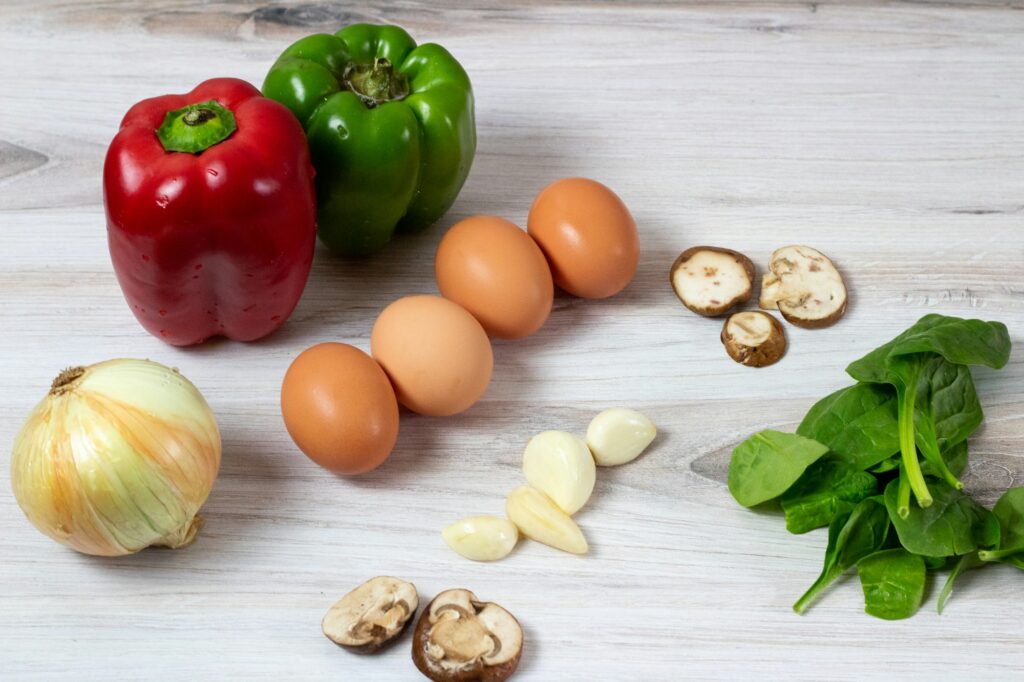
Everything here is grocery-store ordinary. The calories next to each item are what I got from the USDA’s FoodData Central for that amount, rounded to the nearest calorie.
- 12 large eggs: 858 calories, about 75 grams of protein
- 1 cup of liquid egg whites: 126 calories, about 26 grams of protein
- 1 cup of 2% cottage cheese: 183 calories, about 24 grams of protein
- A 10-ounce bag of plain frozen hash browns (just potatoes, no added oil): 233 calories
- 8 ounces of white mushrooms, sliced: 50 calories
- 5 ounces of fresh spinach: 33 calories
- 1 large red bell pepper, diced: 43 calories
- 1 medium onion, diced: 44 calories
- Half a cup of shredded cheddar: 228 calories
- 2 teaspoons of olive oil: 80 calories
Salt and pepper to taste. A couple of garlic cloves if you like them; they barely move the numbers. The whole pan comes to about 1,880 calories and 158 grams of protein.
Two things on that list do the heavy lifting. The egg whites and the cottage cheese add about 50 grams of protein for about 309 calories between them, which is why each square fills you up more than its calories suggest. And check the label on the hash browns. Some frozen potatoes are fried before they’re frozen, and those carry a lot more fat than the plain shredded kind.
How I Put It Together
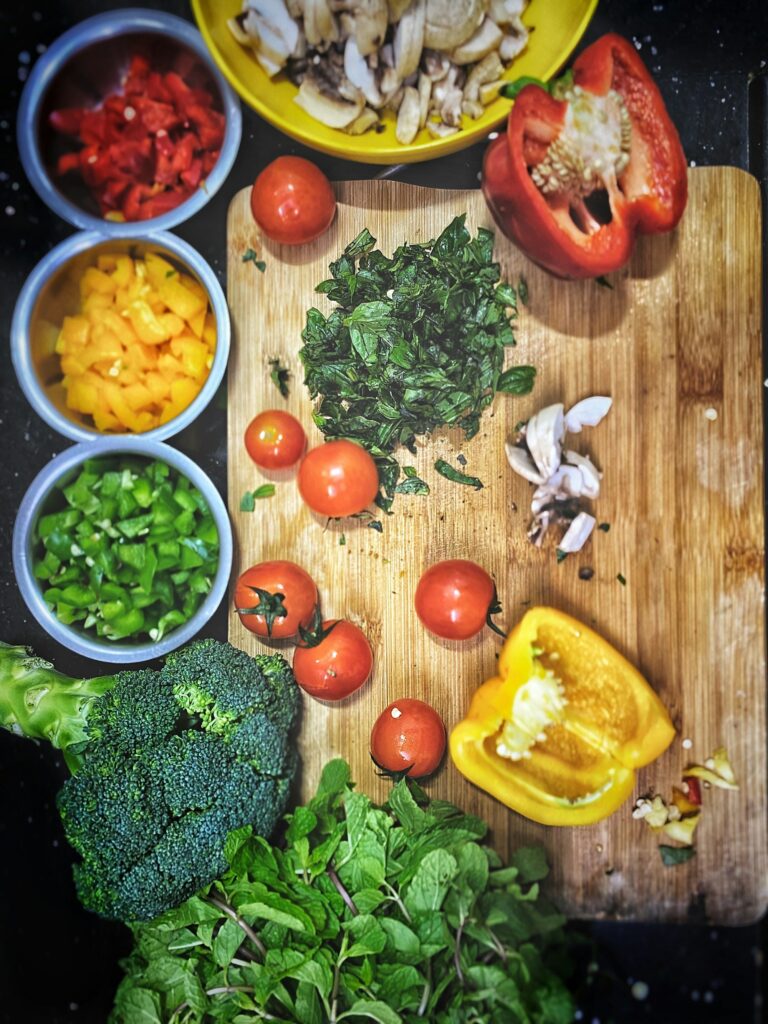
Heat the oven to 375°F. Then cook the vegetables first, which is the step people skip and regret.
Mushrooms and spinach are mostly water. Put them in raw and that water ends up in your casserole, and you get a soggy middle that never quite sets. So warm the olive oil in a big skillet, cook the onion and pepper for a few minutes, add the mushrooms and keep going until the liquid they let out has cooked off. Toss in the spinach last and stir until it wilts down to almost nothing.
Spread the hash browns in a 9 by 13 inch baking dish (parchment paper helps if your dish likes to stick). Spoon the vegetables over the top. In a big bowl, whisk the eggs, the egg whites and the cottage cheese with some salt and pepper, then pour it all over. Scatter the cheddar on top.
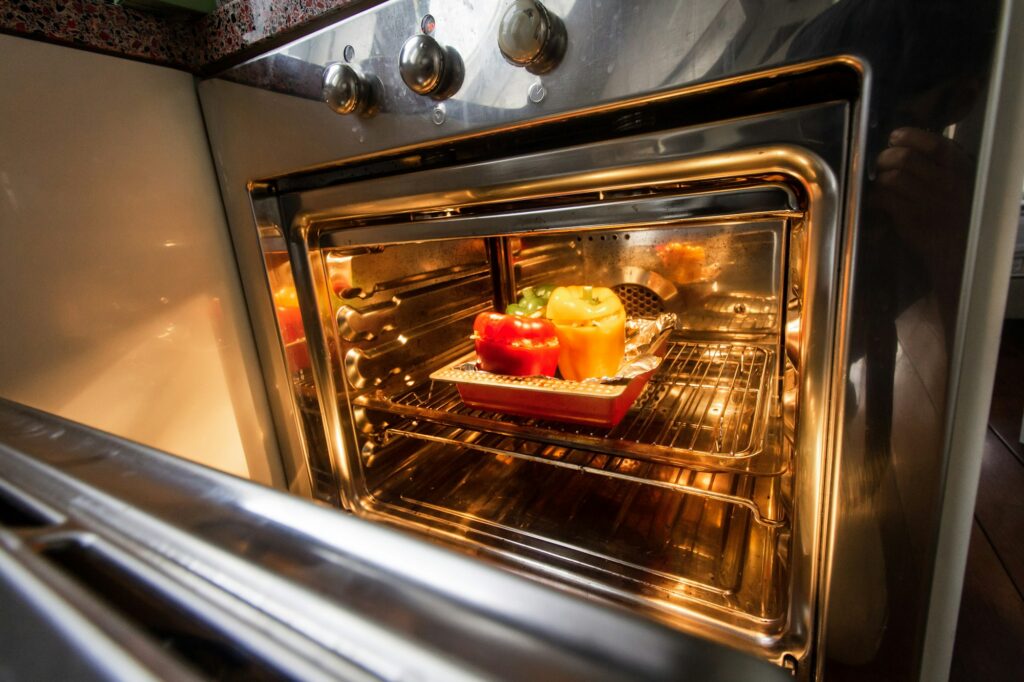
Mine bakes in about 45 minutes, but ovens differ, so go by a thermometer, not the clock. FoodSafety.gov lists 160°F for egg dishes like frittata and quiche and 165°F for casseroles, so I take the center to 165°F and call it done. Let it sit about 10 minutes, then cut it into 10 squares, two rows of five.
The Numbers, Square by Square
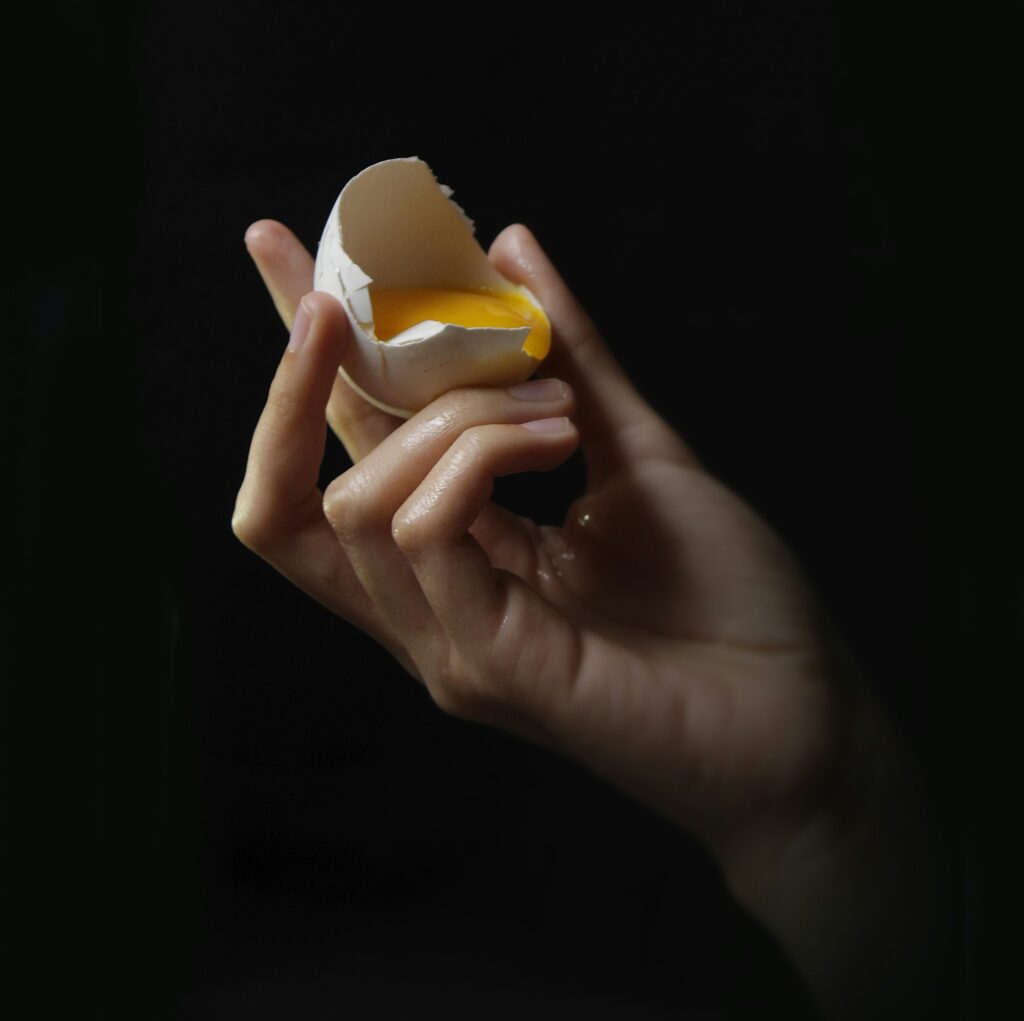
Divide the pan by 10 and each square is about 188 calories with roughly 16 grams of protein. I eat two, so my breakfast is about 375 calories, 32 grams of protein and around 3 grams of fiber. That fiber number is low, which is why I add a piece of fruit on the side most days.
A word on where these numbers come from. USDA figures are averages, and your brand of cottage cheese or hash browns may run a few calories higher or lower. When the label on your package and my list disagree, trust the label. It’s describing the food you actually bought.
Whether 375 is a lot depends on your day. On a 1,500-calorie day it’s 25% of the total. On a 1,200-calorie day it’s about 31%, which still leaves plenty for lunch and dinner. One square plus a piece of fruit works too, if your budget is tighter or you’re just not hungry at 7 a.m.
Those two numbers, 1,200 and 1,500, are floors, not goals. I won’t write a plan that goes under 1,200 calories a day for women or 1,500 for men, and if someone’s handing you one that does, ask your doctor first.
Eggs are most of the protein here, and most of the calories. If eggs are new to your plan, I went through what they do and don’t do for weight loss in Are Hard Boiled Eggs Good for Weight Loss?
Fridge Days and Freezer Days
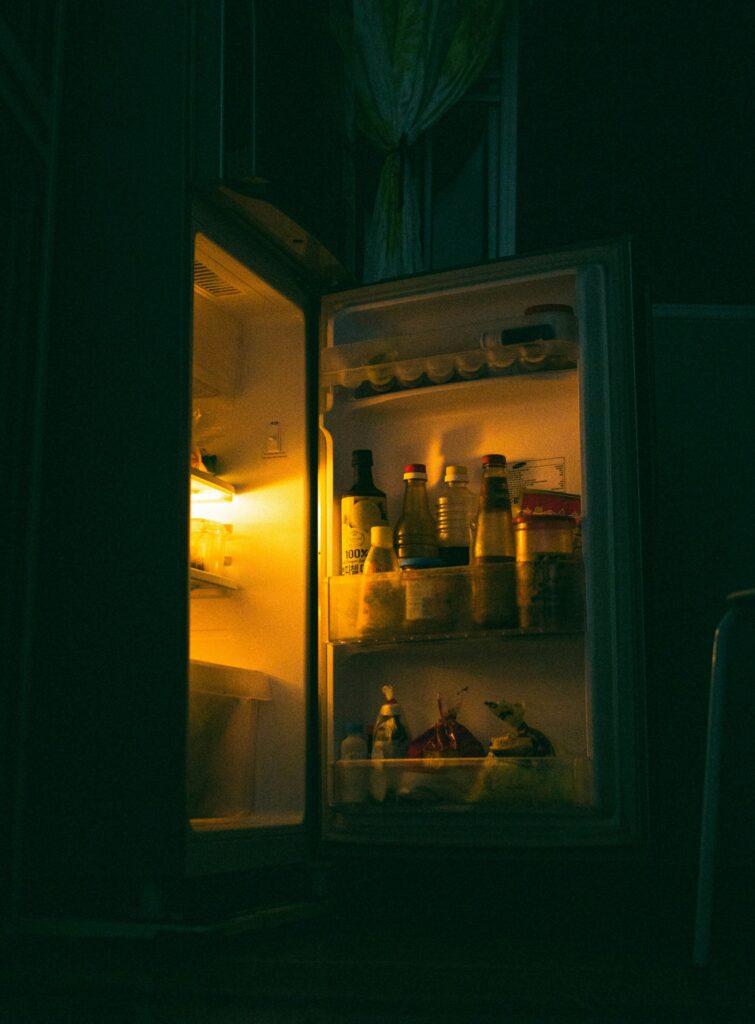
This is the part most make-ahead recipes get wrong. FoodSafety.gov says a baked egg casserole keeps 3 to 4 days in the fridge, or 2 to 3 months in the freezer. Bake on Sunday and Thursday is already day 4. Friday is past it.
So I split the pan the day I bake it. The first three days, Monday through Wednesday, go in the fridge, two squares to a container. Thursday’s and Friday’s squares go straight into the freezer on Sunday night. On Wednesday night I move Thursday’s container down to the fridge to thaw, and Thursday night I do the same for Friday’s.
Write the day on each container with a marker. It sounds fussy. It’s also the only thing that stops a forgotten square from hiding at the back of the fridge until Saturday, when you won’t remember which day it was baked.
Reheat until it’s hot all the way through. FoodSafety.gov’s number for leftovers is 165°F, the same as the bake. In my microwave that’s about two minutes for two squares, covered, with a stir-around halfway (well, a flip, since it’s a square). A thermometer in the middle settles any doubt.
Swaps That Change the Numbers
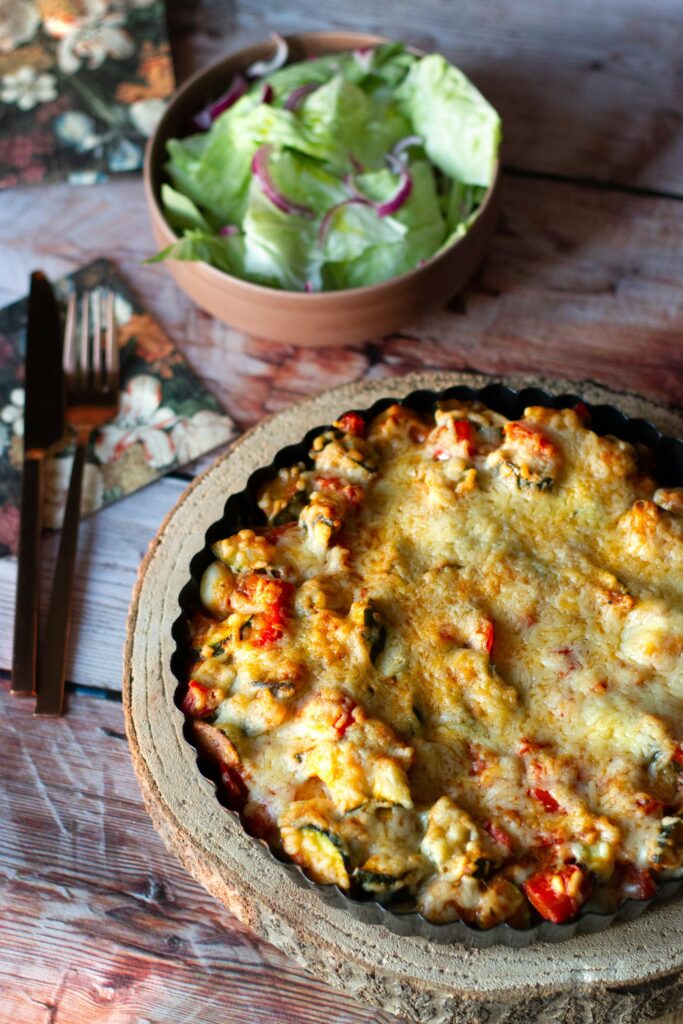
The recipe above is a starting point, not a rule. Here’s what the common swaps do to a two-square breakfast, using the same USDA numbers.
Cheese is the big one. The half cup of cheddar adds 228 calories to the pan, about 46 per breakfast. Double it and you’re at roughly 420 a breakfast. Leave it off and you’re at about 330, though you’ll miss it on the top. The hash browns are almost the same story: skipping them takes off about 47 calories per breakfast, but you lose what makes it feel like a casserole and not a crustless quiche.
Out of liquid egg whites? Four more whole eggs instead adds about 160 calories to the pan, or 32 per breakfast. Not a big deal either way. Want more vegetables? Go for it. Another 8 ounces of mushrooms adds about 50 calories to the whole pan, and more spinach adds less than that. Just cook them first, same as before.
What Breakfast Can and Can’t Do for Weight Loss
I’ll be straight with you, because the diet industry won’t. Eating breakfast doesn’t burn fat. There’s no magic in the morning.
A 2019 review in the BMJ pooled 13 trials comparing people who ate breakfast with people who skipped it. The breakfast eaters ended up slightly heavier, about 0.44 kilograms (just under a pound), and ate about 260 more calories a day. The authors rated the evidence as low quality, with short follow-up, and concluded that adding breakfast “might not be a good strategy for weight loss.”
So why bother? Because the point isn’t breakfast. The point is a meal you planned and counted, one you can’t talk yourself out of on a busy morning. If you’re someone who skips breakfast and does fine, keep skipping it. If you’re someone who eats breakfast anyway, and grabs the wrong thing when there’s no plan, this pan is the plan.
And keep your expectations honest. The CDC says people who lose weight at a gradual, steady pace of about 1 to 2 pounds a week are more likely to keep it off than people who lose it faster. That’s the pace to aim for. A week where the scale doesn’t move isn’t failure; it’s a Tuesday. Keep baking the pan, keep up a brisk walk most days, and give it a month before you judge it. For more morning ideas, here’s my list of the Best Healthy Fat Burning Breakfast options.
One last thing. Make it exactly as written for the first week before you change anything. You’ll find out what two squares feel like at 10 a.m., if you’re still full or already hunting for a snack, and that tells you more about the right portion for you than any number on this page.