
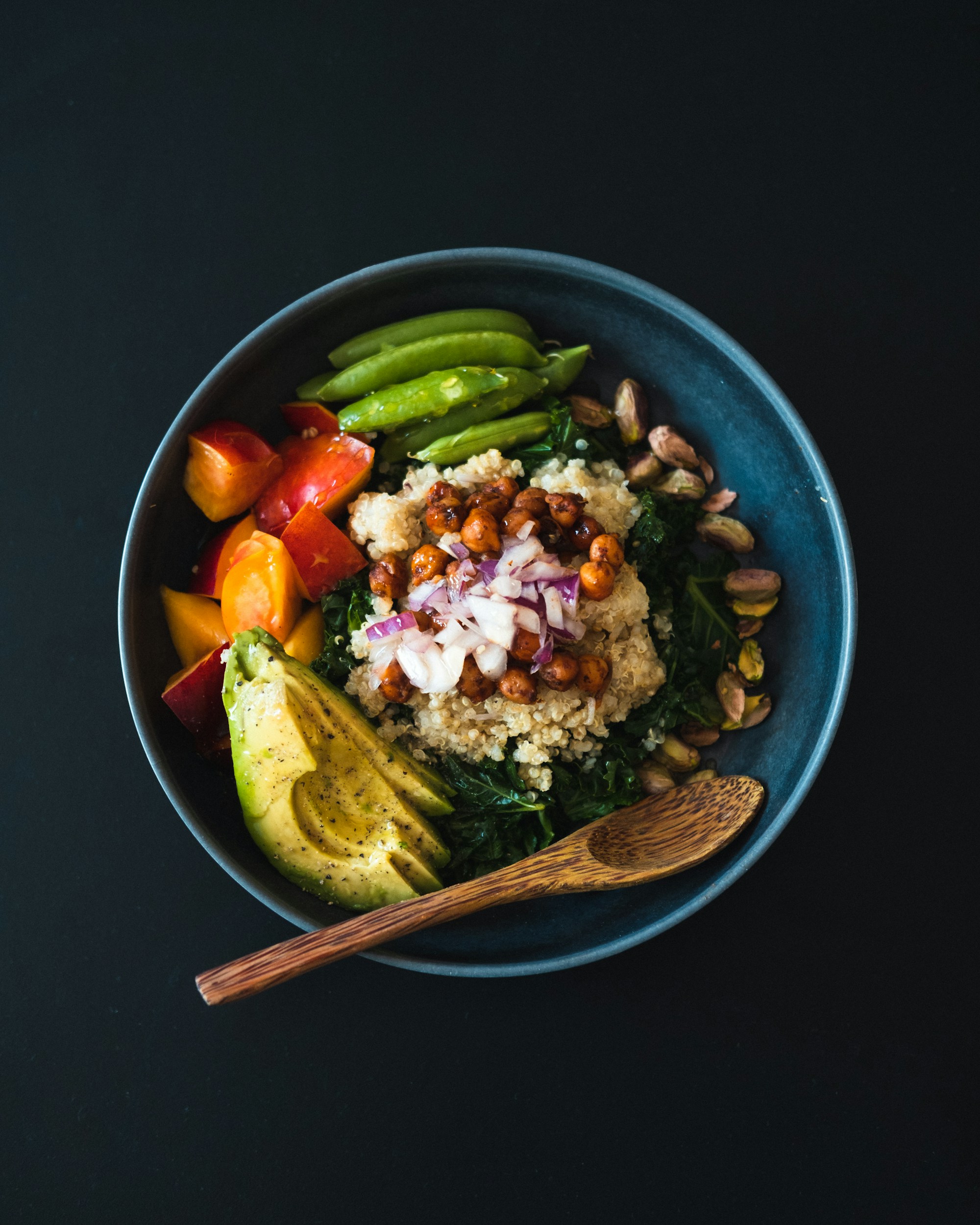

The high fiber foods that help most with weight loss are the ones with the most fiber per calorie, and that list isn’t the one on the cereal box. Raspberries, blackberries, cooked leafy greens and the broccoli family top it. Beans and lentils come next, with real calories but a lot of fiber and protein for them. Bread and rice sit near the bottom, and nuts aren’t far above them. You can reach a full day’s fiber in well under 450 calories if you pick from the top of the list.
I’m not a doctor or a dietitian, and none of this is medical advice. If you have a digestive condition, diabetes or kidney trouble, or you take medication, check with your doctor before you change how you eat.
Why Fiber Matters When You’re Eating Less

Fat loss still comes down to a calorie deficit. Fiber doesn’t change that math. What it changes, honestly, is how the deficit feels, and I think that’s the part most diets get wrong. Soluble fiber, the kind you get from oats and beans (lentils too, and a lot of fruit), soaks up water and turns to a gel as you digest it, and that slows digestion down, MedlinePlus explains.
There’s research that lines up with it. The POUNDS Lost study put adults with overweight or obesity on diets about 750 calories a day below their needs for 6 months. When researchers went back through the food records of 345 of them, fiber intake was the single most influential predictor of how much weight people lost, more than the diet’s mix of fat to carbs to protein. Fiber was also strongly tied to whether people stuck to their diet at all.
That’s an analysis of one trial, not proof that fiber melts anything. But I’d call it the right kind of evidence for a real person. The people who ate more fiber lost more and quit less.
How Much Fiber You’re Aiming For
The Dietary Guidelines for Americans set the target at 14 grams of fiber for every 1,000 calories you eat. The Daily Value on a food label is 28 grams, which is that same rule on a 2,000-calorie day. If you’re eating 1,500 calories to lose weight, the guideline math says about 21 grams.
Most of us aren’t close. The Dietary Guidelines put the shortfall at more than 90% of women and 97% of men, and the FDA lists fiber among the nutrients Americans don’t get enough of. So if you’re dieting on chicken and rice with a protein bar on the side, you’re probably in the 90% too.
Here’s the catch I’d point out to anyone in a deficit. Fewer calories leaves less room for fiber, so the foods you pick have to carry more of it per bite. That’s why the ranking below goes by calories, not by serving size.
The Fiber-per-Calorie Ranking

By the USDA’s numbers, here’s how much fiber 100 calories of each food gives you (vegetables and beans cooked, fruit raw):
- raspberries: 12.5 g
- blackberries: 12.3 g
- collard greens: 12.1 g
- kale: 11.1 g
- artichoke: 10.8 g
- spinach: 10.4 g
- cauliflower: 10.0 g
- broccoli: 9.4 g
- navy beans: 7.5 g
- Brussels sprouts: 7.2 g
- chia seeds: 7.1 g
- split peas: 7.0 g
- lentils: 6.8 g
- black beans: 6.6 g
And from the bottom: a banana gives 2.9 g per 100 calories, dry oats 2.7 g, whole-wheat bread 2.4 g, almonds 2.2 g, brown rice 1.3 g and white bread 0.9 g.
Turns out what’s missing from the top is every “high fiber” packaged food. Whole grains are good for you, and nobody’s telling you to drop them. They just aren’t where the fiber-per-calorie action is.
Berries Win the Fruit Bowl

A cup of raw raspberries has 8.0 grams of fiber for 64 calories. A cup of blackberries has 7.6 grams for 62. Put those next to the fruit most people grab: a medium banana has 3.1 grams for 105 calories, and a medium apple with the skin has 4.4 grams for 95.
A medium pear does better than both, at 5.5 grams for 101 calories. Strawberries are lighter on fiber than the other berries (2.9 grams in a cup of whole ones) but only 46 calories, so they still earn a spot.
Frozen berries count, by the way, and they’re usually cheaper in winter. I’d keep a bag in the freezer, so you’ve got breakfast fiber on a Tuesday when the fridge is empty.
Beans and Lentils Carry the Biggest Servings

Per calorie, beans land in the middle of the list. Per serving, nothing else comes close. One cup of cooked lentils has 15.6 grams of fiber for 230 calories. Split peas have 16.3 grams for 231. Black beans have 15.0 grams for 227, and navy beans top the group at 19.1 grams for 255.
That’s more than half the day’s 28 grams in one cup, plus protein, which is the other thing that keeps you full in a deficit. A cup is kinda a big portion, though. Half a cup in a soup, a salad or a burrito bowl is plenty to start with, and your gut will thank you for starting small (more on that below).
Canned beans are fine. Rinse them to cut some of the salt, and check the label for the sodium line.
Cooked Greens and the Broccoli Family

This is where you get the most fiber for the fewest calories. A cup of chopped, cooked collard greens has 7.6 grams for 63 calories. A cup of cooked spinach has 4.3 grams for 41. One medium cooked artichoke has 6.8 grams for 64.
Half a cup of cooked broccoli has 2.6 grams for 27 calories, and half a cup of Brussels sprouts has 2.0 grams for 28. Those look small until you notice the calories. You could eat a mountain of them and barely dent your budget.

Greens cook way down, so a pan that looks like a lot of spinach ends up as one cup on the plate. In my book that’s a feature. Most of the volume was water, and the fiber stays.
READ: Anti-Inflammatory Diet for Weight Loss: A Simple Week of Meals
Bread and Oats: What the Label Tells You

A slice of whole-wheat bread has 1.9 grams of fiber for 81 calories. A slice of white bread has 0.6 grams for 67. Whole wheat wins that matchup, easily. But try hitting 28 grams with it: you’d need about 15 slices, and that’s around 1,200 calories of bread.
Oats are a solid breakfast base. A third of a cup of dry oats has 2.7 grams for 102 calories, so they’re more about a warm bowl that holds the good stuff than about fiber on their own. Top them with berries and you’ve got a real start.
On a packaged food, read the % Daily Value next to Dietary Fiber. The FDA’s rule of thumb is that 5% or less per serving is low and 20% or more is high. Words on the front of the box (“multigrain,” “made with whole grains”) don’t tell you much. The label does.
READ: High Protein Overnight Oats for Weight Loss: Calories per Jar
Chia Seeds: Great Fiber, Count the Spoonfuls

An ounce of dried chia seeds (about 28 grams) has 9.8 grams of fiber, but it also has 138 calories. Per 100 calories that’s 7.1 grams, right up there with lentils. The problem is the size. An ounce is a small heap, and it’s easy to pour two without noticing.
So my rule is to use chia as a topping you measure, not a health food you pour. A spoonful stirred into oats or yogurt is great. A chia pudding with a quarter cup of seeds, sweetened milk and honey is dessert, and it should go in the log that way.
What a 28-Gram Day Looks Like

Here’s one way to hit the label’s 28 grams, using the same USDA numbers:
- Breakfast: a third of a cup of oats with a cup of raspberries, 10.7 grams of fiber and 166 calories
- Lunch: half a cup of black beans in a salad or bowl, 7.5 grams and about 114 calories
- Snack: one medium pear, 5.5 grams and 101 calories
- Dinner sides: half a cup each of broccoli and Brussels sprouts, 4.6 grams and 55 calories
That’s 28.3 grams of fiber in 436 calories. On a 1,500-calorie day, more than a thousand calories are still free for protein, healthy fats and the rest of your meals.
You don’t have to eat exactly this. Swap the pear for an apple, the beans for lentils, the broccoli for spinach. Just keep one high-fiber food at every meal, and the day adds up by itself.
Go Slow and Drink Water

If you eat about 15 grams of fiber a day now and jump to 30 tomorrow, you’ll find out why people quit fiber. Bloating and gas are the usual complaints, with cramps right behind. Mayo Clinic’s gastroenterologists, writing about fiber supplements, put it simply: go slow, start low and increase gradually. The same goes for food.
Add one high-fiber food at a time, give it a week, then add the next. Drink plenty of water as you go, which Mayo Clinic also recommends, since fiber works with water.
And if more fiber makes your symptoms worse instead of better, or you have a gut condition like IBS or Crohn’s, talk to your doctor. Some people need a different plan, and your doctor is the one to make it with you.
The Boring Answer

Fiber won’t burn fat. A calorie deficit does that, and fiber makes the deficit easier to live with. Fill your plate from the top of the per-calorie list, add beans for the big servings, and read the label on anything in a box.
Then keep the pace sane. The CDC says people who lose weight gradually and steadily, about 1 to 2 pounds a week, do better at keeping it off. My hard line: don’t go under 1,200 calories a day if you’re a woman or 1,500 if you’re a man. The scale will move slower than the ads promise. That’s the boring answer, and it’s the one that works.
READ: Is Sweet Potato Good for Weight Loss? The Filling Carb Explained