
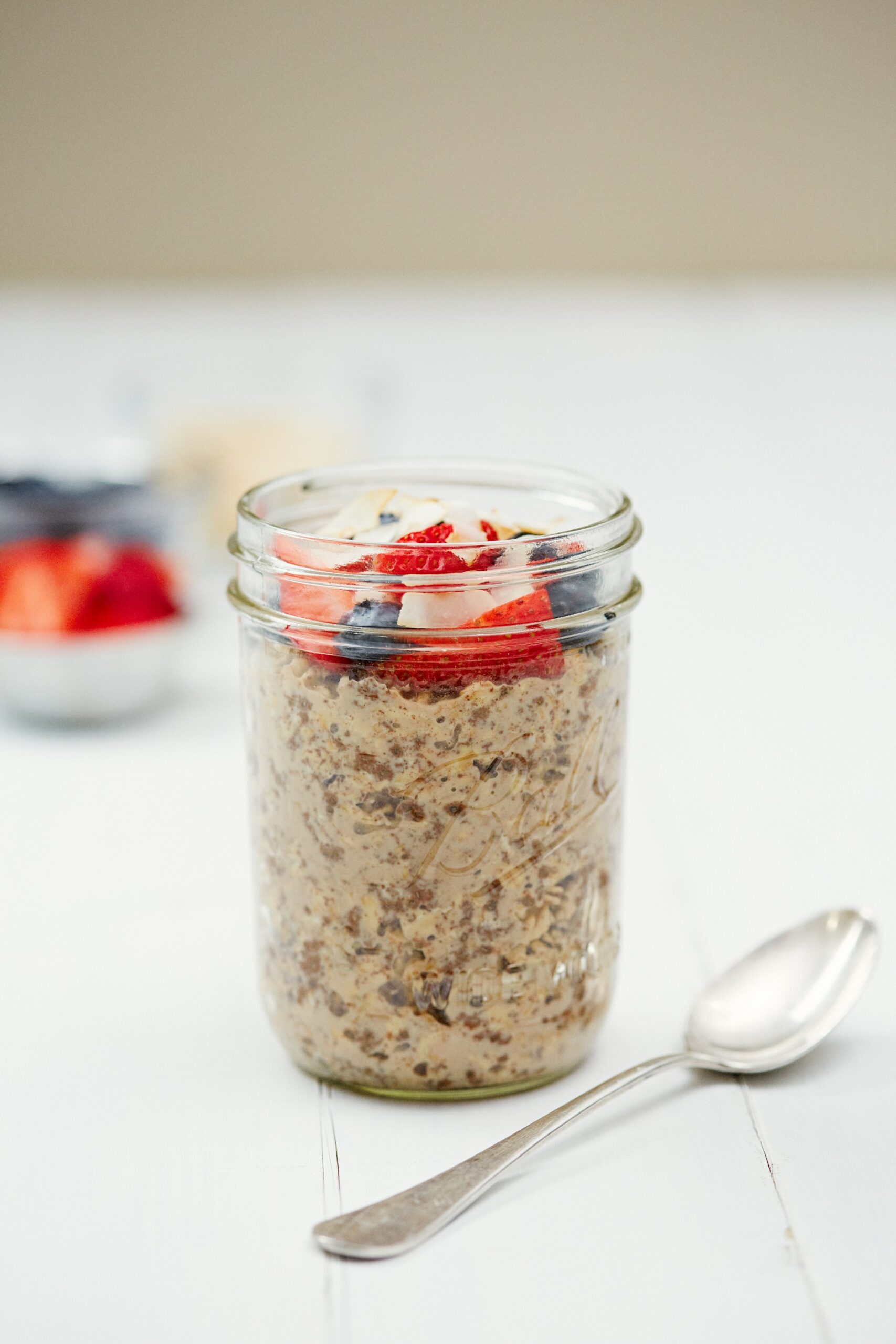
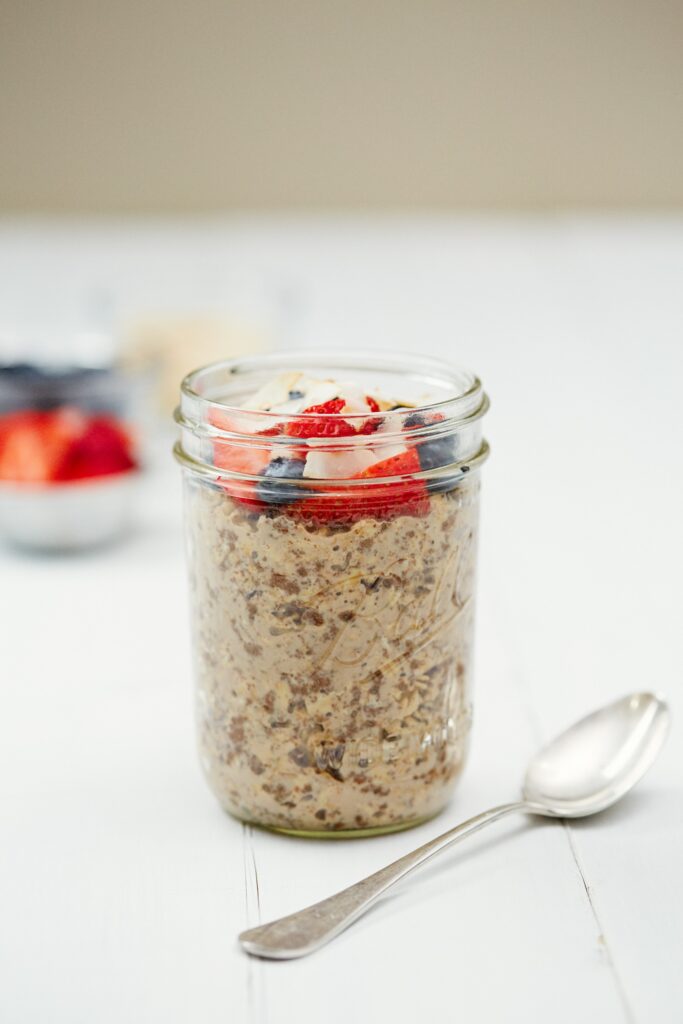
My high protein overnight oats come out to about 352 calories and 22 grams of protein a jar. That’s 40 grams of rolled oats, half a cup of skim milk, 100 grams of plain nonfat Greek yogurt, 12 grams of chia seeds and half a cup of blueberries. I worked out every number from the USDA’s FoodData Central, one ingredient at a time.
The boring answer is that the jar isn’t magic. It’s a breakfast I already measured, sitting in the fridge on a Tuesday morning when I’m running late and the drive-through is on the way to work. That’s the whole trick. The calories get counted once, on a Sunday night, instead of guessed at 7 a.m.
Where people get burned is the toppings. A spoon of peanut butter and a drizzle of honey can turn a 352-calorie jar into a 500-calorie one, and it looks exactly the same in the jar. I’ll show you that math further down.
Quick and important: I’m Ernest, and I’m not a trainer, a dietitian or a doctor. I read the label, read the published guidance, and do the arithmetic out loud. If you have diabetes or a kidney condition, have a food allergy, take medication, are pregnant, are under 18, or have a history of disordered eating, talk to your doctor before you change what you eat. A recipe on a blog isn’t medical advice.
Here’s what I’ll go through:
- my base jar, weighed out, with the calories for each ingredient
- where the protein actually comes from (Greek yogurt or cottage cheese)
- the toppings that quietly add 50 to 100 calories at a time
- why I weigh the chia seeds too
- fruit, fresh or frozen
- how long a jar keeps, and why I make them twice a week
- where one jar fits in a calorie deficit
My Base Jar, Weighed Out
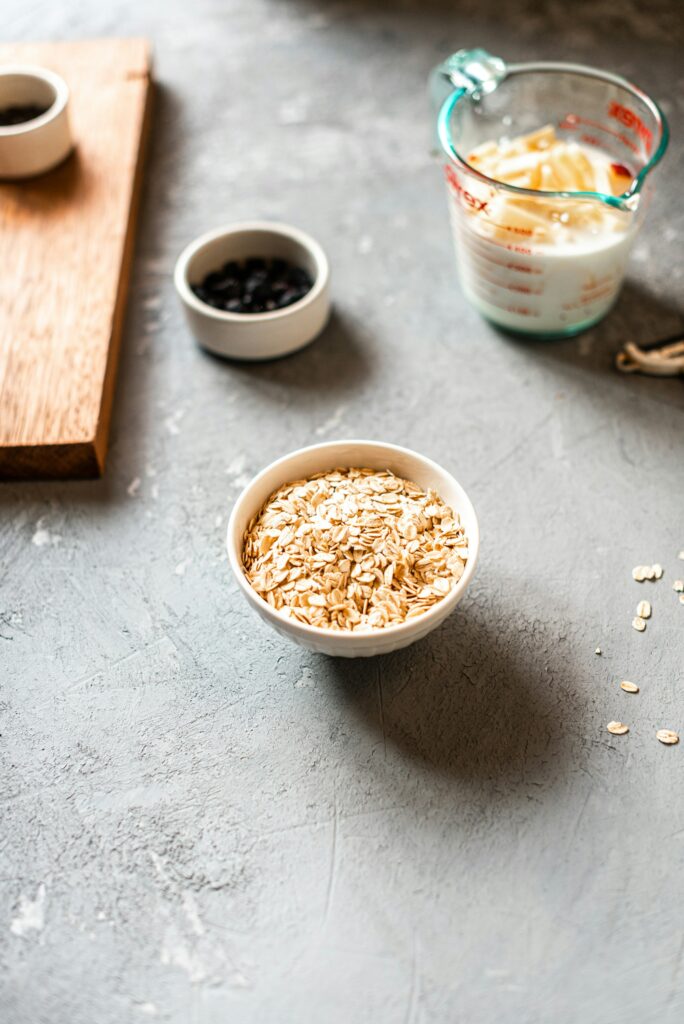
I use a 16-ounce mason jar and a kitchen scale. A measuring cup is fine for the milk. For the oats and the seeds, I’d rather weigh, because a heaped scoop and a level one aren’t the same amount, and the jar won’t tell you which one you made.
Here’s the base jar, with the USDA’s numbers for each line:
- 40 grams of rolled oats (about half a cup): 152 calories, 5.3 grams of protein
- ½ cup (122 grams) of skim milk: 41 calories, 4.1 grams of protein
- 100 grams of plain nonfat Greek yogurt: 59 calories, 10.2 grams of protein
- 12 grams of chia seeds: 58 calories, 2 grams of protein
- ½ cup (74 grams) of blueberries: 42 calories, 0.5 grams of protein
That adds up to about 352 calories, 22 grams of protein and 10 grams of fiber. There’s about 17 grams of sugar in there too, and none of it is added. It’s the milk’s own lactose, a little from the yogurt, and the biggest share from the berries.
The method takes two minutes. The oats, the milk, the yogurt and the chia go in the jar, you stir it well enough that the seeds don’t clump at the bottom, and the lid goes on. It sits in the fridge overnight. The berries go on top either the night before or in the morning, whichever you remember.
One note on the oats. I use plain rolled oats, not the flavored instant packets. A flavored packet comes with its own sugar and its own label, and then my numbers above don’t apply to your jar anymore.
READ: Cheap Oatmeal Porridge and Weight Loss?
Where the Protein Actually Comes From
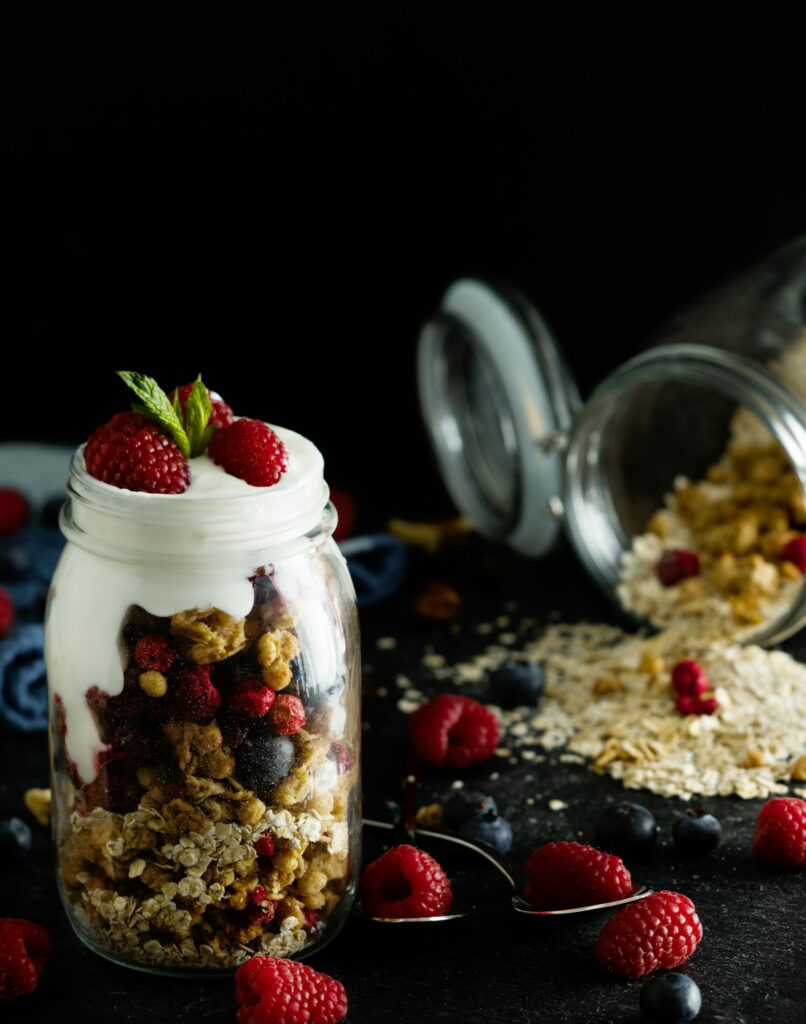
Look at that list again. Oats bring some protein, but most of the 22 grams comes from dairy. The Greek yogurt alone is 10.2 grams, almost half the jar. Add the milk and the two dairy lines make up 14.3 grams.
Turns out dry oats have more protein per 100 grams than the yogurt does: 13.2 grams against 10.2. On paper the oats win. The difference is the calories that come with it. Oats are 379 calories per 100 grams, and the nonfat Greek yogurt is 59. So for protein per calorie, the yogurt wins by a mile, and that’s why it’s the line I’d make bigger first.
Go from 100 grams of yogurt to 150 and the base jar becomes about 382 calories and 27 grams of protein. That’s the cheapest protein bump I know of in this recipe, and you don’t need a new ingredient for it.
Cottage cheese is the other option. The USDA lists 1% cottage cheese at 72 calories and 12.4 grams of protein per 100 grams. Swap it in for the yogurt and the jar comes out to about 366 calories and 24 grams of protein. Honestly, I blend it first. Lumps of curd in my oatmeal aren’t my thing, but plenty of people stir it straight in and don’t mind.
Skim milk is the quiet one, at 34 calories and 3.4 grams of protein per 100 grams. It’s mostly there to soak the oats, and it still adds 4.1 grams to the jar.
A lot of recipes add a scoop of protein powder. I don’t. If you do, read the label on your tub, because a scoop isn’t the same size from brand to brand and some powders come sweetened. That number lives on the label, not in the USDA database, and it’s the only one that counts for your jar. If you have a kidney condition or your doctor has given you a protein target, follow that target, not a recipe.
READ: Is High Protein Good for Weight Loss?
The Toppings That Quietly Add Up
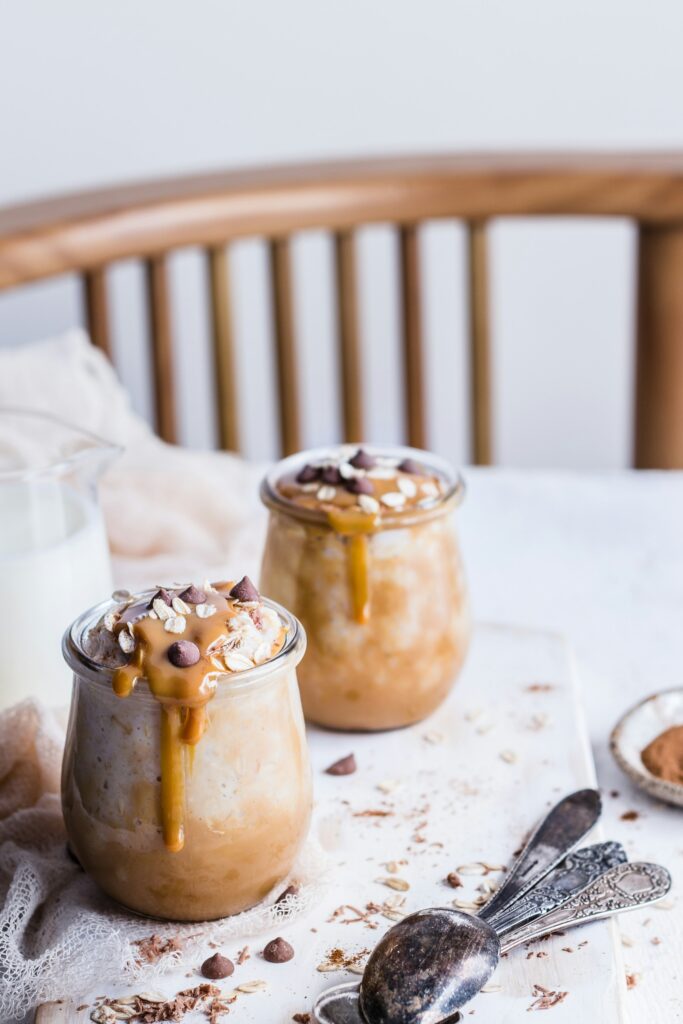
This is where a weight-loss breakfast turns into dessert with a good reputation. Nothing’s wrong with a topping. The problem is that nobody weighs it, and the jar looks the same either way.
Here’s what each common one adds, by the USDA’s numbers:
- 16 grams of peanut butter (about a level tablespoon): 96 calories and 3.6 grams of protein
- 1 tablespoon (21 grams) of honey: 64 calories and 17 grams of sugar
- 1 tablespoon (20 grams) of maple syrup: 52 calories and 12 grams of sugar
- 50 grams of banana (roughly half a small one): 45 calories
- 2% milk instead of skim for the half cup: 20 more calories
Put the peanut butter on, then the honey, then the banana, and the jar is about 557 calories. That’s more than 200 calories of toppings on a 352-calorie breakfast. Nothing about it looks like a big meal. It still eats a real chunk of a calorie deficit.
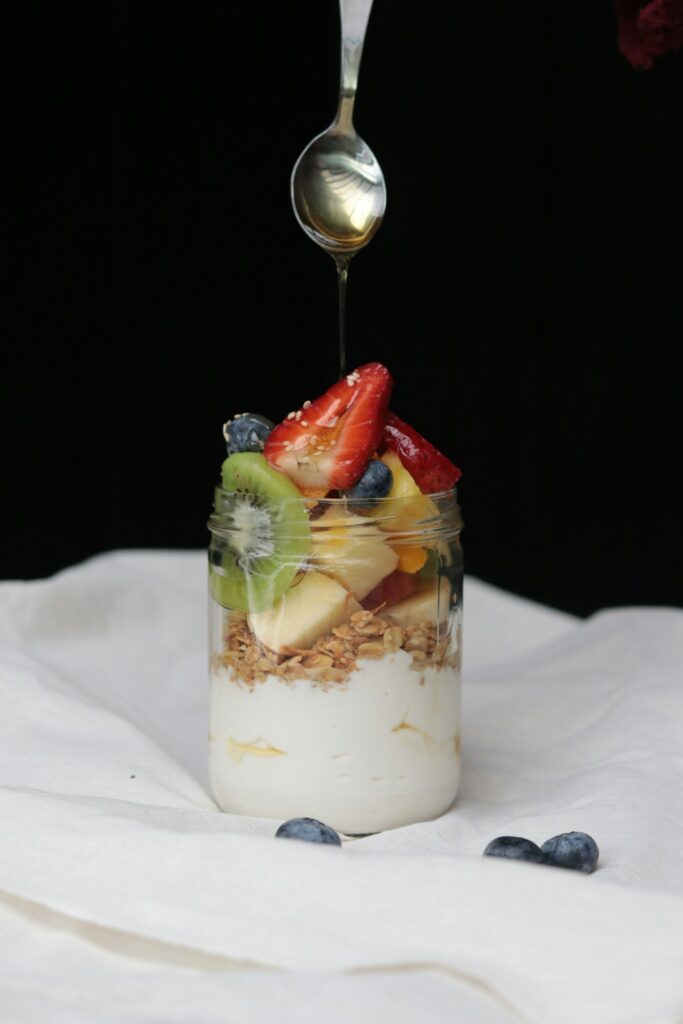
Honey surprised me the most. One tablespoon is 17 grams of sugar, about as much as the whole base jar gets from the milk, the yogurt and the berries put together. It’s sugar you added, and a calorie deficit counts it like any other calories.
My rule is pick one. Peanut butter or a sweetener, not both. If it’s peanut butter, I weigh it, because a spoonful off the knife isn’t a measured amount and it’s 598 calories per 100 grams. That’s the densest thing you’ll put anywhere near this jar.
Chia Seeds: Weigh Them Too
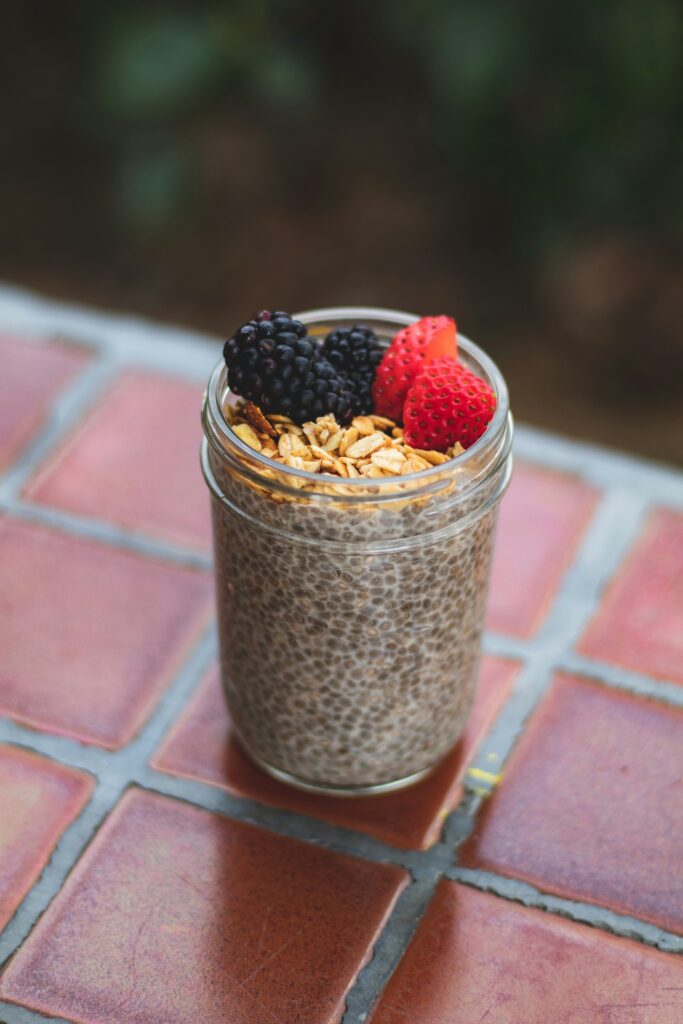
Chia seeds are the reason overnight oats set up thick instead of soupy. They soak up liquid and turn to gel while the jar sits in the fridge. They’re also dense. The USDA lists chia at 486 calories per 100 grams, more than the oats.
So 12 grams gives you 58 calories and 4.1 grams of fiber, and I think that’s a good trade. The trouble starts when someone doubles it “for the fiber” without a scale. At 24 grams, the chia alone is 117 calories.
The fiber is the part I like about this jar. The whole base recipe has about 10 grams, which is more than a third of the 28-gram Daily Value on the FDA’s food label. The chia brings 4.1 grams of it, the oats 4.0 and the blueberries 1.8.
Chia is also where most of the fat comes from. The base jar has about 7 grams of fat in total, and 3.7 grams of that is the seeds. That’s not a problem. It’s just worth knowing that “a few more seeds” isn’t free.
If you’re not used to much fiber, I’d start with a smaller jar and see how your stomach handles it. If fiber is a medical question for you, that’s one for your doctor.
Fruit, Fresh or Frozen
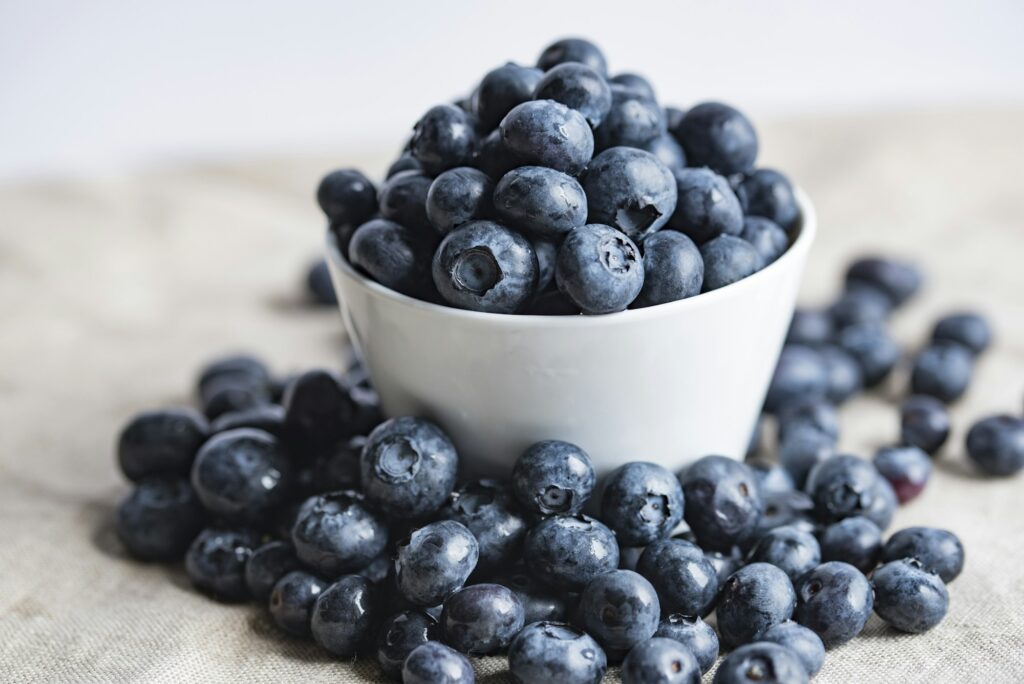
Blueberries are my default. They’re 57 calories per 100 grams, and they hold up in the fridge better than sliced banana, which goes brown. Half a cup, 74 grams, is 42 calories with about 7.4 grams of the fruit’s own sugar.
Banana is denser. The same 74 grams of banana would be 66 calories instead of 42. That’s not a lot on its own, but it’s the kind of swap that adds up across a week of jars.
Frozen berries work fine. Drop them in the night before and they thaw in the jar by morning. Just check that the bag says unsweetened, because some frozen fruit comes with sugar added, and that’s printed on the label.
The cheap trick here is to let the fruit do the sweetening. A ripe handful of berries on top and I don’t miss the honey. If you’ve been adding both, try a week with fruit only and see if you even notice.
Make Three or Four Days, Not Seven
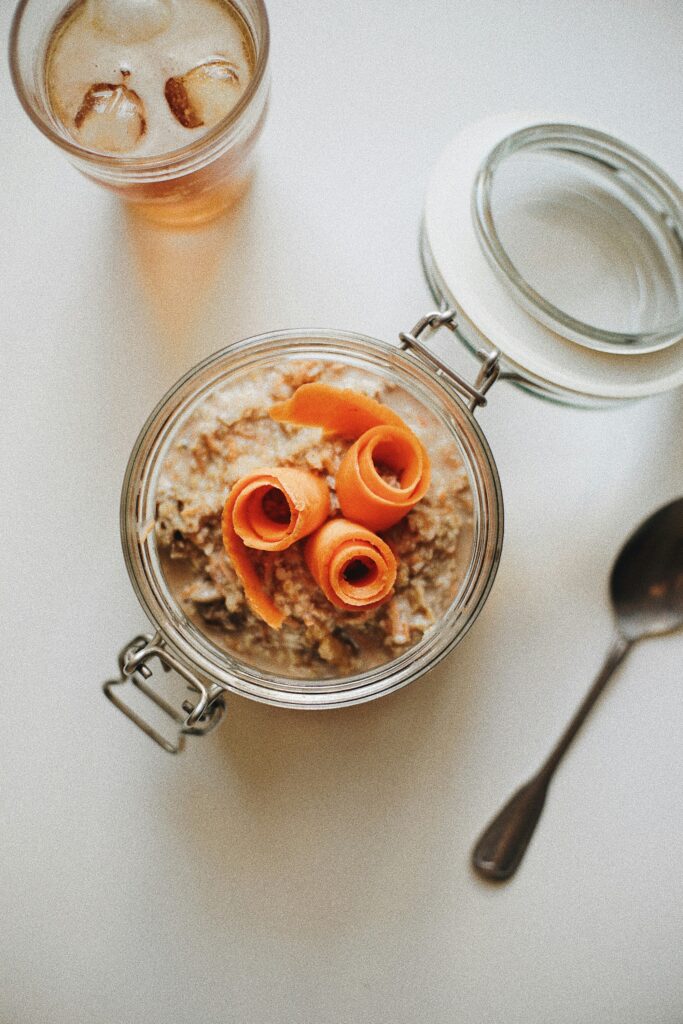
This is where I part ways with the “seven jars on Sunday” videos. The USDA’s Food Safety and Inspection Service says leftovers keep in the refrigerator for 3 to 4 days. I treat a jar of soaked oats with milk and yogurt the same way, since it’s prepared food with dairy in it, sitting in my fridge.
So I make three or four jars at a time, twice a week. The fridge stays at 40 °F or below, which is the USDA’s line, and the jars go in as soon as they’re made, well inside the two hours FSIS allows for prepared food to sit out. I add one rule of my own: a jar can’t outlast its ingredients. If the yogurt’s date is Wednesday, that jar is done on Wednesday.
My rhythm is Sunday night and Wednesday night. Three jars on Sunday cover Monday through Wednesday. Four on Wednesday cover Thursday through Sunday, and even the last one gets eaten inside four days.
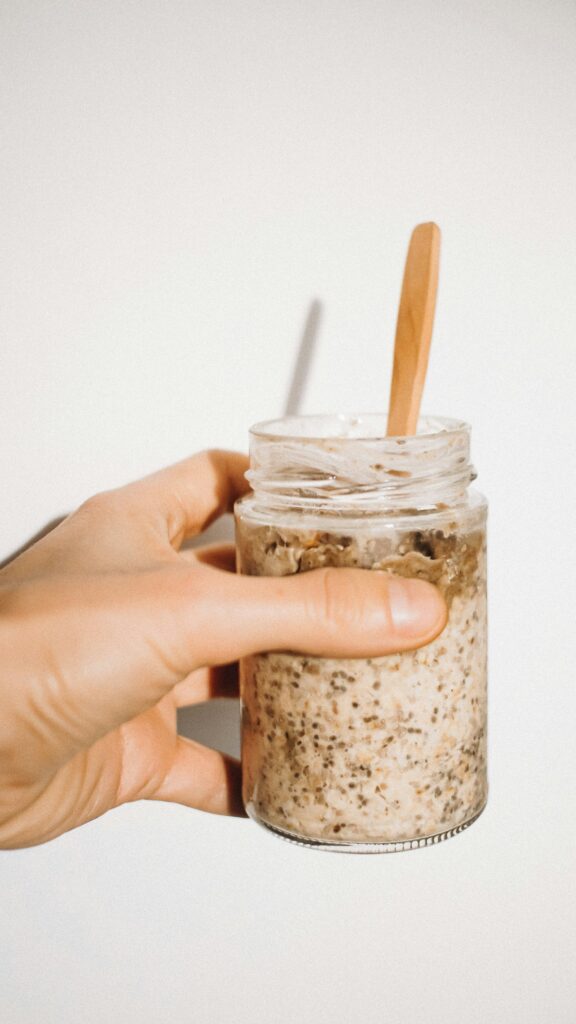
Glass jars with tight lids are what I use. Seeing the portion you measured is half the point, and a strip of tape with the date on the lid ends any guessing. I wrote up the whole twice-a-week routine, lunches included, in my meal prep post.
READ: Meal Prep for Weight Loss: Count It Once, Keep It Safe
Where One Jar Fits in a Calorie Deficit
Harvard Health puts the numbers plainly. To lose 1 to 2 pounds a week, a rate it says experts consider safe, you eat 500 to 1,000 calories a day less than what keeps your weight steady. It also says calorie intake shouldn’t fall below 1,200 a day for women or 1,500 a day for men, except under the supervision of a health professional. The CDC adds that people who lose weight at a gradual, steady pace, about 1 to 2 pounds a week, are more likely to keep it off.
Here’s how the jar sits inside a day. On a 1,500-calorie day, the base jar is under a quarter of it. On a 1,200-calorie day, it’s a bit under 30%. The loaded jar at 557 calories is almost half of a 1,200-calorie day, and that’s before lunch.
That’s the point I’d want you to take away. The jar isn’t the problem, and it isn’t the solution either. It’s a number you already know, which beats a number you guessed.
One thing I won’t help with is going under those floors. Two jars a day and nothing else isn’t a plan, it’s a crash diet, and a crash diet is the one you quit. The plan that loses the most in two weeks is almost never the plan you’re still on in two months.
The scale will stall at some point anyway. When it does, I check my portions first, starting with the toppings, before I touch anything else. And if you’re not sure what your own calorie number should be, especially with a health condition, your doctor is the person to set it.
If there’s a topping you want me to run the numbers on, leave it in the comments. I read them all.