
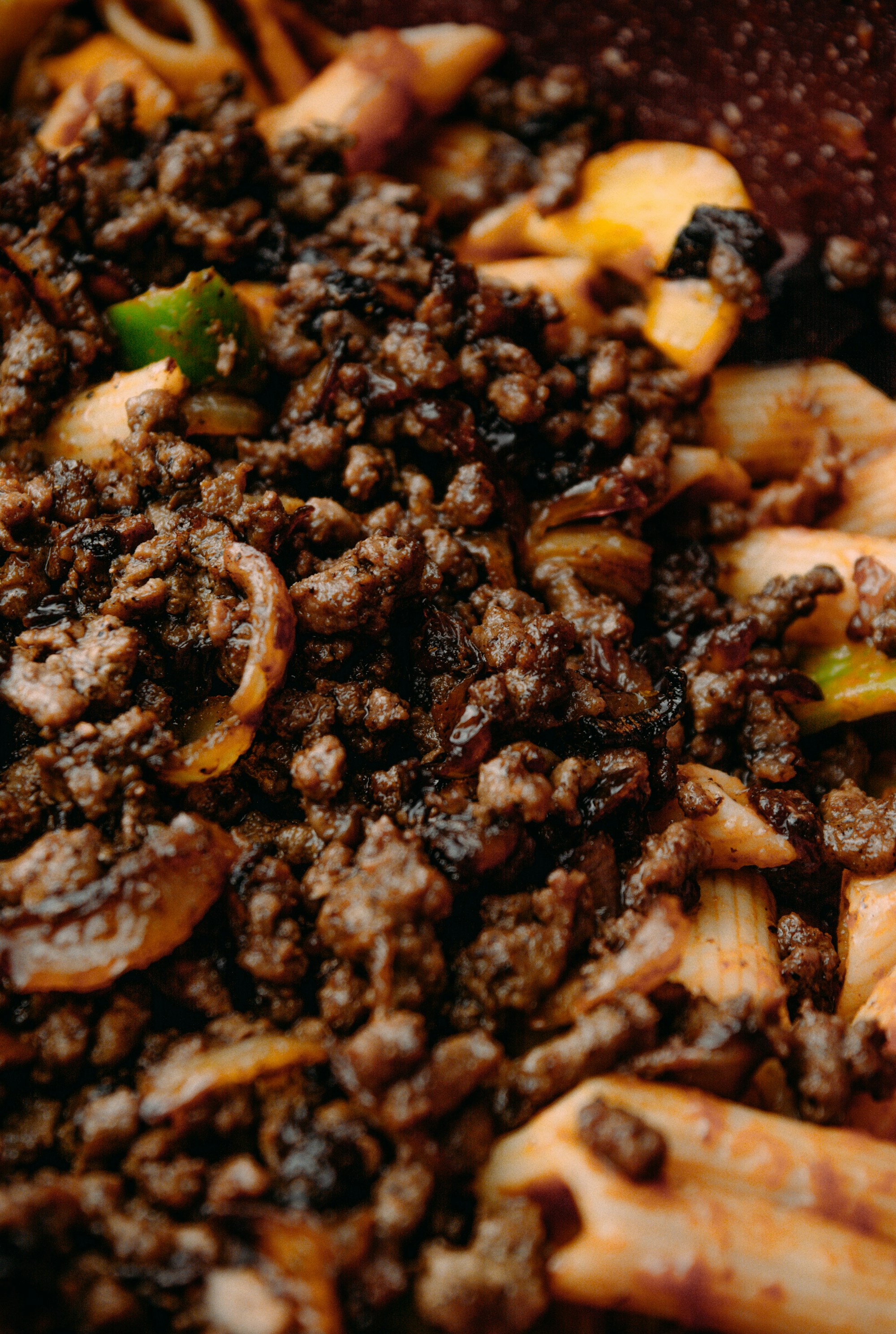

Yes, ground beef can absolutely fit a fat-loss plan. Three ounces of cooked 93/7 beef has about 178 calories and almost 25 grams of protein. The same amount of 80/20 has about 231 calories and nearly the same protein. So the blend you buy matters, but how much you eat, how often, and whether you drain the pan matter just as much.
Quick note first. I’m not a dietitian or a doctor. If you have heart disease or high cholesterol, ask your doctor how much red meat fits your plan. And whatever you eat, aim to lose about 1 to 2 pounds a week. People who lose at that steady pace tend to keep it off better than people who crash.
What 80/20 Really Means on the Label

Here’s the part that trips people up. The 80/20 on the label is measured by weight, on the raw meat. It does not mean 20% of the calories come from fat.
Here’s how that plays out. 100 grams of raw 80/20 beef has 20 grams of fat and 254 calories. Fat has 9 calories per gram, so that’s 180 calories from fat, or about 70% of the total. Run the same math on raw 93/7 and fat drops to about 41% of the calories. That’s a much bigger gap than “80 vs 93” makes it sound.
The rules behind the label are worth knowing too. Anything sold as ground beef can’t be more than 30 percent fat, and it can’t have added water, phosphates, binders or fillers. A “percent lean” number has to sit right next to the percent fat, in the same size and color of print, so a store can’t shout “85% lean” and hide the 15% fat.
The word “lean” on its own means something stricter. To use it, the beef needs less than 10 grams of fat per 100 grams, and “extra lean” means less than 5. So a 93/7 pack can honestly say lean. An 80/20 pack only gets to print its percentages.
Calories and Protein, Blend by Blend
Now the numbers that actually land on your plate. Here’s what 3 ounces of cooked, pan-browned crumbles gives you in each blend.
Look at what changes and what doesn’t. Calories drop from 231 for 80/20 to 196 for 90/10, 178 for 93/7 and 164 for 95/5. Protein barely moves at all: about 23 grams for 80/20, 24.1 for 90/10, 24.6 for 93/7 and 24.8 for 95/5.
So the leaner blends aren’t giving you more steak. They’re giving you the same protein with less fat around it. Swap 80/20 for 93/7 and you save about 53 calories a serving. Do that at five dinners a week and it’s roughly 265 calories, about one small snack. Helpful, sure. Not a miracle (sorry).
So which one should you buy? If the price gap is small, I’d grab 93/7 — it’s the easy pick. If 80/20 is a lot cheaper this week, buy it, brown it well and drain it. That one habit closes much of the gap, which brings us to the next trick.
READ: Is High Protein Good for Weight Loss?
Draining the Pan Does More Than You’d Think

This is the cheapest trick on the list, and most people skip it. Cooking ground beef and pouring off the fat cuts its total fat and its saturated fat by about a third. Rinse the cooked crumbles with hot water and you shave off roughly another quarter on top of that.
There’s a trade-off. The rinse also washes away some niacin, a B vitamin, though the beef is still a good source of it. Cholesterol doesn’t budge. And honestly, rinsed beef tastes a little flat, so it works best in dishes with lots of sauce and spice, like chili or tacos.
If you rinse, tip the crumbles into a strainer and pour hot water over them. Pour the grease into an old can and toss it once it cools, never down the sink, unless you enjoy calling a plumber.
Here’s the practical upshot. A drained 85/15 can end up closer to a lean blend than you’d guess, which is handy when the 93/7 costs a lot more per pound.
Why the Protein Helps on a Calorie Deficit

Ground beef’s real selling point is protein. When people eat fewer calories, higher-protein diets in short, tightly run studies led to more weight loss, more fat loss and more muscle kept than lower-protein diets with the same calorie cut.
Keeping muscle matters more than it sounds. Muscle is what makes you look leaner at the same weight, and it’s what carries you through the workout with dumbbells in your living room.
Let’s not oversell the fullness part, though. Higher-protein meals did make people feel a bit fuller in those studies. They did not reliably make people eat less at the next meal. So protein helps, but it won’t do the work of a calorie deficit for you.
How much is enough? The 2025-2030 Dietary Guidelines aim for 1.2 to 1.6 grams of protein per kilogram of body weight a day. For a 180-pound person, that’s about 82 kilograms, or roughly 98 to 131 grams a day. One 3-ounce serving of 93/7 covers about a quarter of the low end.
The Saturated Fat Math

This is where the blend matters most. The same guidelines say saturated fat should stay at or under 10% of your daily calories. On a 2,000-calorie day, that’s 200 calories, or about 22 grams.
Three ounces of cooked 80/20 crumbles has about 5.6 grams of saturated fat, so one serving eats up about a quarter of that limit. The same serving of 93/7 has about 3.3 grams, closer to 15%. If you eat beef three or four nights a week, that difference adds up fast.
If your doctor is watching your cholesterol, they may want you lower than 10%. That’s a number to get from them, not from me.
Cook It to 160°F, Whatever the Color

Ground beef needs to hit 160°F inside, and you can’t eyeball that. Some patties turn brown well before they reach a safe temperature, so “no pink” doesn’t prove it’s done.
It cuts the other way too. In one USDA study, nearly half the patties still showed some pink at 160°F. A cheap instant-read thermometer settles it in five seconds, and I’d call it the most useful gadget in a fat-loss kitchen. Stick it in the thickest part of a burger, or a few spots in a pan of crumbles.
Five Easy Ground Beef Dinners for a Fat-Loss Week

Here’s where beef earns its spot. These are the kind of dinners you can make on a Tuesday after work without a recipe card.
- Lettuce-cup tacos. Brown 93/7 with taco spices, drain it, and spoon it into crisp lettuce leaves with salsa and a little cheese. You keep the crunch and lose the shells.
- Chili with extra beans. Use less beef than the recipe asks for and make up the difference with beans and peppers. It’s a great place for rinsed 85/15, since all that spice hides the flat taste.
- Burrito bowls. Beef and black beans over a measured scoop of rice, with salsa and a squeeze of lime. Measure the rice, because that’s where bowls quietly double in size.
- Stuffed peppers. Mix beef with tomato sauce and a bit of rice, fill halved bell peppers and bake. The pepper is the bowl, so you eat it too.
- Beef and broccoli. Stir-fry thin crumbles with a big pile of broccoli and a splash of soy sauce (garlic too, if you like it). Go heavy on the broccoli and lighter on the beef.

See the pattern? Every one of them pairs the beef with a lot of vegetables or beans. That’s what keeps the plate big and the calories reasonable.
READ: High Protein Meal Prep for Weight Loss: 5 Lunches That Keep You Full
How Much, How Often, and the Boring Answer

The blend you pick matters less than the size of the scoop. A heaping pile of 93/7 can easily outweigh a sensible portion of 80/20. Weigh your cooked beef for one week, just to calibrate your eye, and you’ll be surprised how big 3 ounces looks.
Batch cooking helps a lot. Brown two pounds on Sunday, drain it, portion it into containers and you’ve got the base for four or five dinners. That’s one less reason to grab takeout when the week gets busy.
And then the boring answer, the one nobody wants to hear. Ground beef won’t make or break your fat loss. A calorie deficit you can keep does that, plus a brisk walk most days and enough sleep. If the scale stalls for a few weeks, look at portions and snacks before you blame the beef. A plateau is normal, and it usually means the plan needs a small tweak, not a new diet.
READ: Meal Prep for Weight Loss: Count It Once, Keep It Safe
Conclusion

Ground beef is good for weight loss when you treat it like any other food. Pick 90/10 or leaner when you can, or drain a fattier blend well. Keep portions near 3 to 4 ounces cooked, cook it to 160°F, and pile on the vegetables.
Read the label, do the math once, and then stop overthinking it. What’s your go-to ground beef dinner on a busy weeknight? Tell us in the comments!