
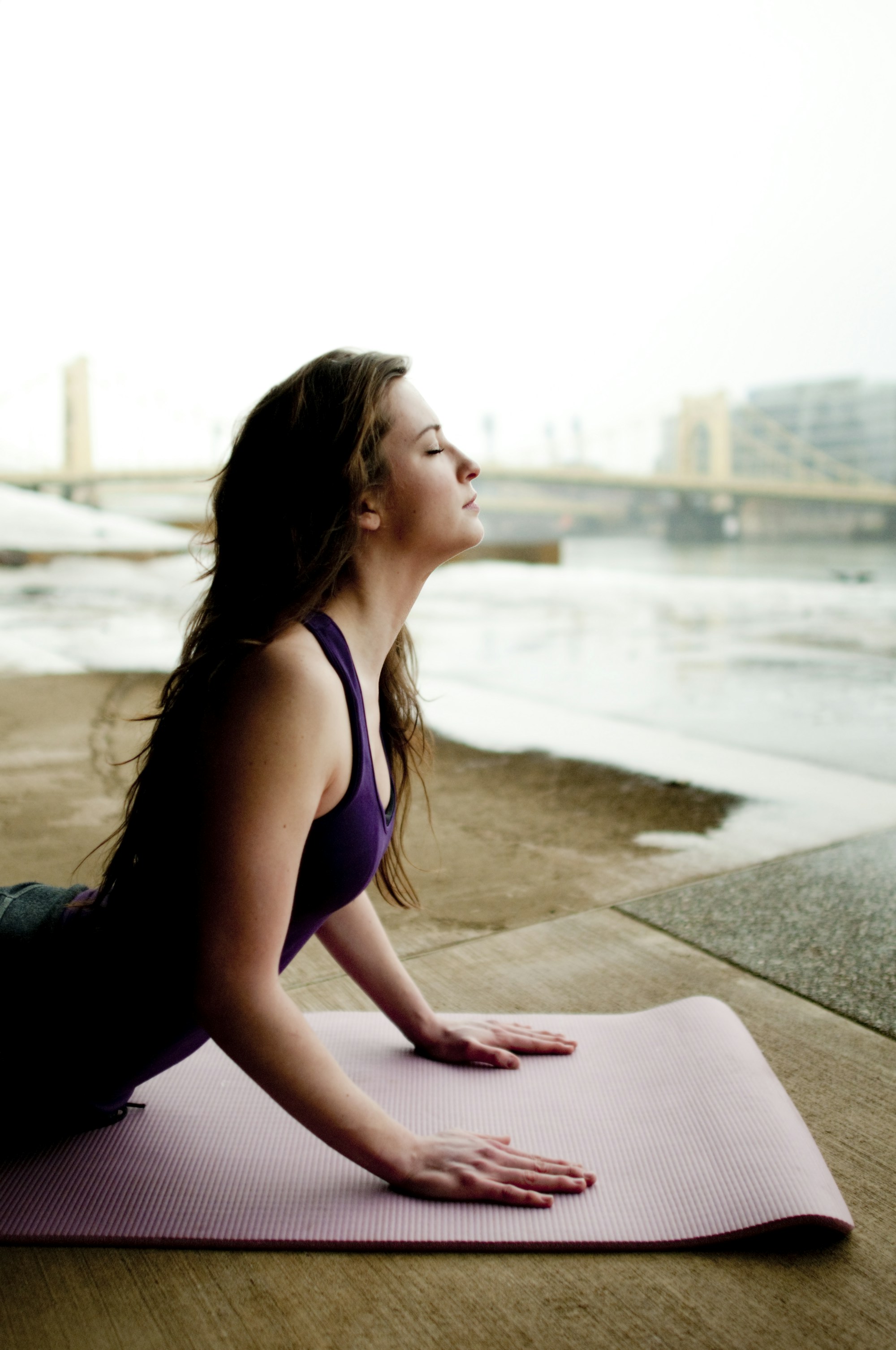

Pilates can help you lose weight, but not because it torches calories. Twenty minutes on a mat burns somewhere around 70 to 100 calories, about what a brisk walk does. Where it earns its spot is the core work and how easy it is to keep doing on a Tuesday night. Pair it with a calorie deficit and some walking, and you’ve got a plan a real person can stick to.
I’m not a doctor, a trainer or a dietitian, and this isn’t medical advice. If you’re pregnant, you’ve had recent surgery, or you’ve got back trouble, osteoporosis or a heart condition, talk to your doctor before you start.
What 20 Minutes of Pilates Actually Burns

In a small study the American Council on Exercise paid for, 15 healthy women did two 50-minute mat sessions while their burn was measured. The beginner routine came to 175 calories and the advanced routine to 254. Heart rates stayed modest too, averaging about 54% of maximum in the beginner session and 62% in the advanced one, so I wouldn’t count it as your cardio.
Do the arithmetic and that’s 3.5 calories a minute for beginners and about 5 for advanced. So a 20-minute session lands around 70 calories if you’re new and around 100 if you’re already good at it. Those women averaged about 138 pounds, so a bigger body will burn somewhat more.
For comparison, walking at 3.5 miles an hour for 30 minutes burns about 133 calories for a 155-pound person. That works out to roughly 89 in 20 minutes. So on calories alone, Pilates and a brisk walk are in the same ballpark, and the walk doesn’t need a mat.
I’m telling you this so you don’t reward 20 minutes on the floor with a 300-calorie snack. That’s the trap.
What Pilates Does for the Scale

The research here is better than I expected, with one big asterisk. Across 11 randomized trials with 393 people who were overweight or obese, Pilates programs lasting 8 to 24 weeks took off an average of about 2.4 kilograms, a little over 5 pounds. Body fat percentage dropped by about 4 points and BMI by about 1.2.
Two things didn’t move much: waist size and lean mass showed no significant change. And here’s the asterisk. Most of these trials were small and their quality was weak, so I’d treat that 5 pounds as a rough number, not a promise.
That’s still a real result, by the way. Five pounds over a few months is about the pace I’d want from someone who’s trying not to hate their life. The steady 1 to 2 pounds a week that the CDC talks about is the most I’d ever aim for, and it’s food that gets you there, not the mat alone. Weigh yourself at the same time of day a few mornings a week and go by the weekly average, because any single morning will lie to you.
READ: Healthy Eating for Beginners: One Simple Plate for Fat Loss
Minutes 0 to 5: Wake Up Your Core

Here’s the routine. You need a mat or a soft rug, and enough room to lie down with your arms out. Move slowly, because slow is the whole point of Pilates. Two things will ruin it: rushing and holding your breath. And if getting down to the floor is hard for you, ask your doctor or a physical therapist about a chair version.
Spend the first 2 minutes on your back with your knees bent and your feet flat. Breathe in through your nose, then breathe out slowly as you gently press your lower back into the floor. Let it ease off on the next breath in. It’s a tiny movement, and you should feel it low in your belly.
For the next 3 minutes, do the pelvic curl. On a breath out, peel your hips up one bone at a time until your body’s a straight line from shoulders to knees. Hold for a breath at the top, then lower down slowly. Don’t push up into your neck. If your back pinches, don’t lift as high.
Minutes 5 to 11: The Ab Work

Now 3 minutes of the hundred, and yes, it’s as annoying as it sounds. Lie on your back with your knees bent over your hips, or keep your feet on the floor if that’s too much for now. Lift your head and shoulders a little, reach your arms long by your sides, and pump them up and down in small, quick beats. Breathe in for 5 beats and out for 5. Rest whenever your neck complains.
Next, 3 minutes of the single-leg stretch. With your head and shoulders still up, pull one knee toward your chest and reach the other leg out long, then switch. Go slowly. If your neck gets tired, put your head down and just work the legs. Your lower back should stay quiet against the floor the whole time. If it arches, don’t reach the leg out so low.
Minutes 11 to 17: Legs and Hips

Take 3 minutes for single-leg circles. Lie flat, keep one knee bent with that foot on the floor, and point the other leg at the ceiling. Draw small circles with that leg, five one way and five the other, then switch sides. Your hips shouldn’t rock. Small circles are harder than big sloppy ones, and they do more.
Then 3 minutes of side-lying leg lifts, about a minute and a half on each side. Lie on your side with your legs stacked, then lift the top leg a few inches and lower it slowly. No swinging. It’s a small move, and your hip will let you know it’s working around the 30-second mark.
Minutes 17 to 20: Plank and Cool Down

Give yourself 2 minutes for planks, in short holds with rests in between. Keep your hands under your shoulders and your body in one long line, on your knees if a full plank is too much right now. Try 20 seconds on and 20 seconds off. Stop when your hips start to sag, since that’s your back taking over. Once all of this feels easy, add a few reps or stretch those holds to 30 seconds before you try anything harder.
Use the last minute to cool down. Hug your knees into your chest and rock gently side to side, or sit back on your heels with your arms out in front. Breathe. You’re done, and you’ve spent less time than you’d spend scrolling your phone in line.
Pair It With a Brisk Walk

Twenty minutes on the mat isn’t enough exercise for a week by itself. The CDC’s target for adults is 150 minutes of moderate activity a week, plus muscle-strengthening work on at least 2 days. A brisk walk is the easiest way I know to cover the first part. The mat takes care of part of the second, and a pair of dumbbells on one of those days covers your arms and back.
Here’s a week that fits a normal life. Walk for 30 minutes, 5 days a week, which gets you to 150 minutes. Do the mat routine on 3 of those days, right after the walk or before bed. That’s about three and a half hours over the whole week. Can’t manage 30 minutes at once? Split it up, and ten minutes after each meal counts toward the same total.
Now look at what that week burns. Three mat sessions come to about 210 to 300 calories, and five 30-minute walks come to about 665 for that same 155-pound person, so you’re looking at roughly 900 calories a week. It’s real, but it won’t move the scale much on its own, which brings us to the kitchen.
READ: Sport Walking or Running for Weight Loss?
What to Do About the Food

Fat loss comes down to a calorie deficit, and no exercise on earth can outrun a kitchen that’s working against you. Keep the deficit modest. I’d never go under 1,200 calories a day if you’re a woman or 1,500 if you’re a man, and if you’re aiming lower than that, it’s a conversation for your doctor and a dietitian.
Start smaller than you think you need to. Pick one change you can keep, like a smaller portion at dinner or water in place of soda, and write down what you eat for a week just to see it. One change you keep beats five you drop by Friday.
Read the label on anything you eat often, starting with the serving size. Eat some protein at every meal so you’re not raiding the pantry by 9 p.m. And be patient with the plateau when it shows up, because it will. A week or two with no change on the scale is normal, and water alone can hide real progress.
The Boring Answer on Pilates and Fat Loss

Pilates isn’t a fat-burning trick, and I’d be wary of anyone selling it that way. It’s a slow, low-impact routine you can do on your living room floor with no gear, and that’s a pretty great thing to have if you’re still building the habit.
Stick with the mat 3 days a week for 2 or 3 months, walk most days, and watch the trend on the scale instead of any single morning. If something hurts in a sharp way, stop and check with your doctor. A little muscle burn is fine. Pain in your back or neck isn’t.
Got a move that won’t work for your body? Tell me in the comments and I’ll point you to an easier version. If it hurts, that one’s for your doctor.